



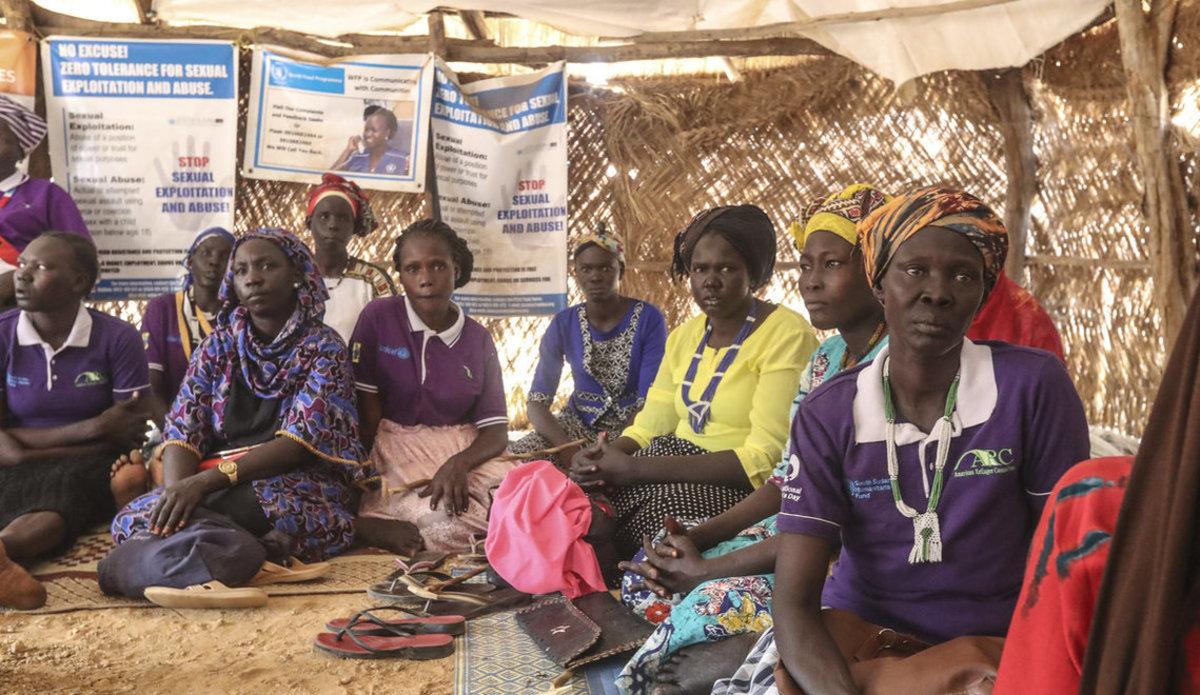
Across war-torn Sudan, women-led organisations are sustaining families, supporting survivors and proving that local solutions remain essential to humanitarian recovery
In a country devastated by two years of war, some of Sudan’s most effective humanitarian responders are not international agencies or government institutions.
They are women.
Across displacement camps, conflict-affected communities and makeshift shelters, women-led organisations are providing food, psychosocial support, protection services and livelihoods assistance to some of the country’s most vulnerable people.
Despite limited resources and immense personal risks, they continue to serve communities that have been uprooted by one of the world’s worst humanitarian crises.


According to Salvator Nkurunziza, UN Women Country Representative in Sudan, these organisations have become central to humanitarian efforts across the country.
“All the work that UN Women does in Sudan is with, for, and through women’s organizations,” he said.
“They are at the forefront of our response to gender-based violence, access to humanitarian services, and building livelihoods for women’s economic empowerment.”
Long before war erupted in April 2023, many of these organisations were promoting women’s rights, education, leadership and community development. Today, they have become lifelines for displaced families, survivors of violence and communities struggling to access basic services.
Their work extends far beyond emergency relief.
They identify urgent needs in displacement camps, provide psychosocial care, support survivors of gender-based violence and help vulnerable women rebuild their livelihoods. They also work closely with women with disabilities, pregnant women and female-headed households, groups that often face heightened risks during humanitarian emergencies.
Nkurunziza said their determination remains remarkable despite the challenges they face.
“They are resilient, continuing their work and mobilizing communities to stop this war despite unimaginable challenges.”
Yet the scale of those challenges is immense.
A crisis that continues to deepen
Two years after conflict erupted in Sudan, millions remain displaced, while hunger, insecurity and violence continue to affect communities across the country.
Women and girls have been among the hardest hit.
Speaking from Port Sudan, UN Women Regional Director for East and Southern Africa Anna Mutavati described the conflict as one of the world’s most devastating humanitarian emergencies.
“I am here to express solidarity with the women of Sudan who are bearing the brunt of one of the world’s worst humanitarian emergencies, to listen to their concerns, and to reassure them that they are not alone,” she said.
The figures alone are alarming.
UN Women reports a 288 per cent increase in demand for lifesaving support following rape and sexual violence since the war began. The organisation says there are strong indications that sexual violence is being systematically used as a weapon of war.
But statistics tell only part of the story.
Mutavati said the testimonies she heard from women during her visit revealed the true human cost of the conflict.
“These numbers don’t capture the pain and fear I hear in the stories of women I have met in displacement camps and protection centres in Port Sudan.
“Every woman fled her home with nothing, escaping violence and personal tragedies. I have heard their accounts of horror, the sexual abuse they suffered, and the constant need to move from one place to another, with nowhere safe to go.”
Many women have lost homes, livelihoods and access to essential services. Food shortages, limited healthcare and lack of clean drinking water have become daily realities for countless families.
The war has also disrupted education for millions of children, leaving many young people facing an uncertain future.
Stories from the ground
Among the most striking moments of Mutavati’s visit was a trip to Saada and Salam Gathering Site in Port Sudan, a school converted into a shelter for internally displaced people.
What she witnessed reflected the wider reality facing many displaced families.
“Eighty-eight families live there, with only three latrines for women and two for men, and no access to drinking water or healthcare,” she said.
“A woman told us how she gave birth alone on the floor of her tent.”
Such stories underscore the urgent need for humanitarian assistance.
Only days before the briefing, around 400 civilians reportedly lost their lives during attacks in Darfur, while thousands remained trapped without access to food, healthcare and other lifesaving services.
Mutavati called for greater protection of civilians and humanitarian workers and urged the international community not to lose sight of the crisis.
The funding gap undermining local solutions
Despite playing a critical role in the humanitarian response, women’s organisations continue to receive only a small fraction of available funding.
For many observers, this represents one of the greatest contradictions in the response to Sudan’s crisis.
Those closest to affected communities often have the fewest resources.
Nkurunziza warned that local organisations urgently need sustained support if they are to continue their work.
“These women-led organizations urgently need long-term support, well beyond short-term emergency funding.
“Yet they receive under 2 per cent of humanitarian assistance in Sudan.”
The consequences are significant.
Without adequate funding, organisations that are already operating under extraordinary pressure struggle to expand services, reach more communities and sustain long-term recovery efforts.
For UN Women, increasing support to women’s organisations is not simply a matter of fairness. It is a practical solution that strengthens the overall humanitarian response.
A place at the table
While emergency assistance remains essential, Sudanese women are also looking beyond immediate survival.
Mutavati said women repeatedly voiced the same message during her meetings.
“Women demand a place at the table to shape the peace and future of their country.
“They demand justice and accountability for the violations they have suffered.
“They demand an end to the war and sustainable long-term peace to return.”
They also want the world to recognise the abuses they have endured and the role they continue to play in supporting their communities.
“They demand that we do not keep quiet about the sexual violence that they are enduring.
“They demand that we use our spaces and voices to help them tell the story of the gross human rights violations that they are experiencing.”
Their message reflects a growing consensus among peacebuilding experts that women must be included in efforts to rebuild Sudan.
Evidence from across Africa and beyond shows that peace processes are often more durable and inclusive when women participate meaningfully in negotiations and recovery efforts.
A call for action
As Sudan enters a third year of conflict, the women leading community responses are asking for more than sympathy.
They are asking for resources.
They are asking for protection.
They are asking for peace.
Most importantly, they are asking to be heard.
For Nkurunziza, the lesson emerging from Sudan is clear.
“Supporting women in Sudan must be at the heart of the humanitarian response.
“When women lead, when women are heard, humanitarian needs are met.
“When they are included in assessments and decision-making, we multiply the impact of our collective efforts.”


