



OWN CORRESPONDENT
Africa has spent more than a decade laying the foundations for economic integration. From establishing the African Continental Free Trade Area (AfCFTA) to promoting the free movement of people, leaders have consistently argued that the continent’s future lies in creating larger, interconnected markets.
Yet one stubborn obstacle continues to stand in the way.
Africans still struggle to move around their own continent. In many instances, it is easier, cheaper and faster to travel through Europe or the Middle East than to fly directly between two African cities. For businesses, investors and entrepreneurs, those inefficiencies come at a cost, limiting opportunities and making it harder to operate across borders.
Speaking at the African Air Transport Convention and Expo in Lomé, Togo, President Paul Kagame argued that Africa no longer suffers from a lack of ideas. Instead, the continent must focus on implementing decisions that have already been agreed upon.
“Air connectivity at its core is about Africa’s ability to act collectively and obtain concrete results. For decades, we have spoken about integration, trade, and free movement. Today, we know what has to be done. We just have to do it,” President Kagame said.
His remarks add momentum to an increasingly important conversation surrounding intra-African trade. While the AfCFTA has generated optimism, many observers argue that lowering tariffs alone will not transform commerce if people and businesses cannot move efficiently across the continent.
President Kagame said Africa’s weak air links are undermining its economic potential.
“Africa is home to almost a fifth of the world’s population and yet accounts for only a small fraction of global air traffic. This is mainly because movement across our continent remains difficult and expensive. In many cases, the fastest route between two African cities is through another continent. This weakens trade, discourages investment, and prevents business from operating at scale,” he said.
He pointed to the Single African Air Transport Market as one of the solutions already available to governments, saying the challenge is no longer creating new frameworks but delivering measurable outcomes.
“The Single African Air Transport Market provides the right framework for change. What it now needs are clear timelines and measurable outcomes,” he said.
President Kagame also urged governments and investors to view aviation infrastructure as an economic investment rather than a cost.
“Connectivity depends on modern airports, maintenance capacity, and reliable fuel supply chains. For this reason, investment in African aviation should not be viewed as a risk but as a strategic lever that drives economic growth.
“Development banks, sovereign wealth funds, institutional investors, and private capital all have a role to play in this transformation. But financing alone is not enough,” he added.
However, he said investment by itself will not solve the problem if governments maintain policies that make air travel prohibitively expensive.
“We must also urgently address the obstacles that undermine progress. Taxes and fees on air travel in Africa are among the highest in the world. Reducing these costs is vital.
“Equally important is regulatory alignment. A single market works best when rules and standards are predictable and consistent across jurisdictions. The institutions mandated to lead this work already exist and they deserve our support,” he said.
President Kagame also drew on Rwanda’s own experience with visa liberalisation, saying openness had produced tangible economic benefits.
“In Rwanda, we removed this particular barrier because we wanted people to visit, connect, and discover opportunities and, as we know, just the right thing to do. We saw stronger business activity, increased tourism, and expanded air links,” he said.
The broader lesson, he added, is that fragmentation has never been a successful development strategy.
“Experience, therefore, shows us that openness and cooperation are powerful drivers of development. No single region has unlocked its potential while remaining fragmented.”
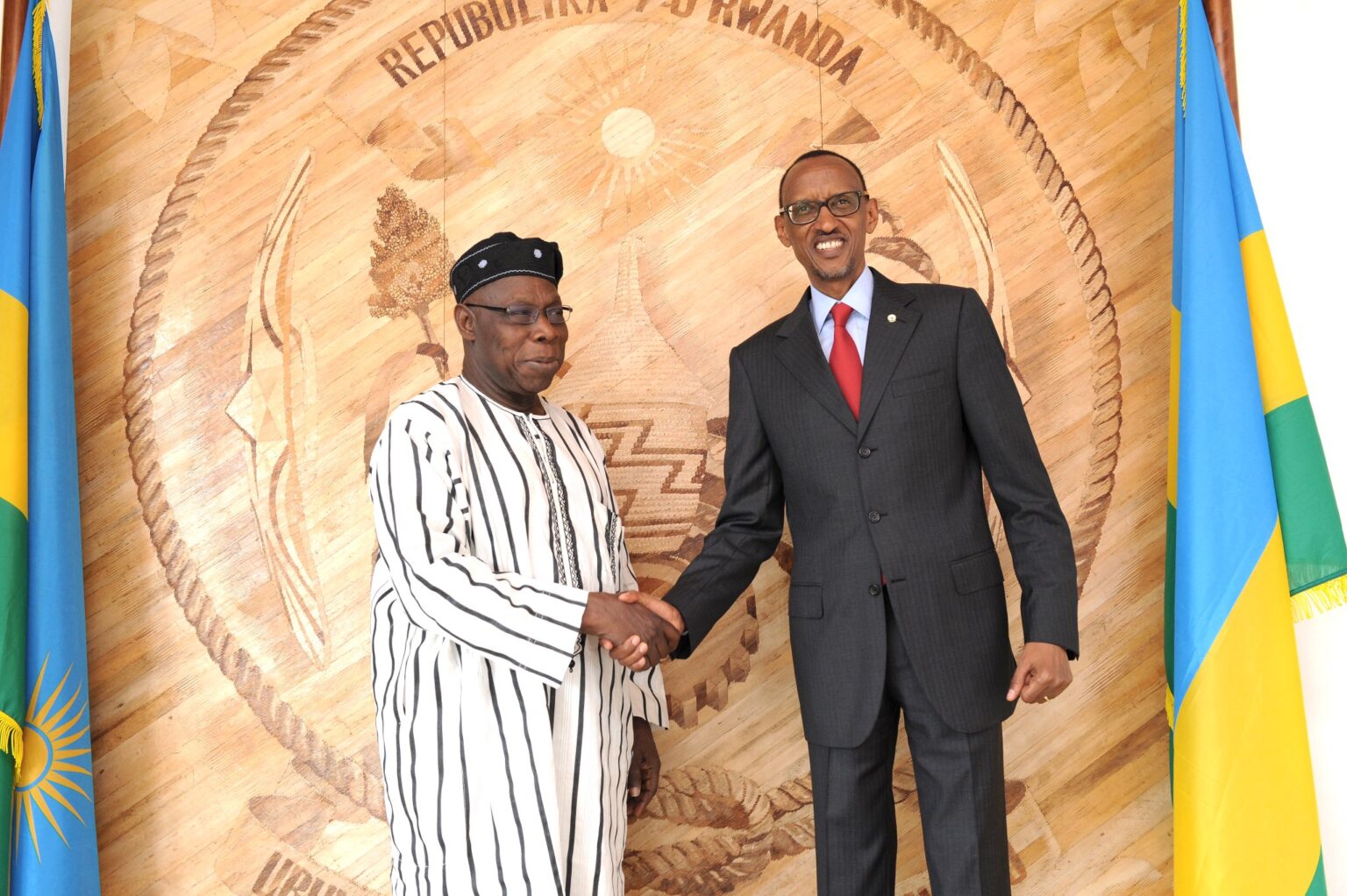
Former Nigerian president Olusegun Obasanjo echoed those sentiments, urging leaders to move beyond declarations and focus on implementation. He called for greater investment in infrastructure to support private sector growth and described both the Single African Air Transport Market and the AfCFTA as part of the continent’s “economic salvation”.
Obasanjo said mobility is not simply an economic issue but a fundamental ingredient of integration.
“Mobility. I’ve always believed that African borders should become bridges, not barriers. The free movement of people is not a luxury. It is the human face of integration and it is an imperative,” he said.
The former Nigerian leader also argued that connectivity cannot be separated from peace, governance and trust.
“As an African elder, which I can claim at age 90, I have learned one clear lesson. Peace, security, governance, infrastructure, and connectivity are interconnected.
“You cannot build corridors amid conflict and insecurity. You cannot secure aviation finance without credible institutions. You cannot expand trade where trust is missing,” he added.
The conversation around intra-African trade is therefore entering a new phase.
The question is no longer whether Africa needs integration. That consensus already exists. The challenge is whether Africans will be able to move freely enough to turn that vision into reality.


