


REGINALD CHAPFUNGA
I have always been a fan of resort hotels.
Give me a river, a golf course, ancient trees and open skies and I am at home. For years, A’Zambezi River Lodge and Elephant Hills, both in the Zimbabwean tourism hub of Victoria Falls, have sat high on my list of favourite places to retreat, think and recharge.
 City hotels rarely made that list.
And if I am being honest, Rainbow Towers Hotel in Harare, Zimbabwe’s capital, was one of those places I had taken for granted. It was always there, rising above Harare’s skyline, hosting conferences, welcoming heads of state and accommodating visiting delegations. I had read stories about its refurbishment but had never paid much attention.
Until recently.
Looking for a quiet space to reflect, reset and map out the second half of the year, I took up an opportunity to spend two nights in one of the refurbished Diplomatic Suites, part of the upgrades undertaken ahead of Zimbabwe’s hosting of the 2024 Southern African Development Community (SADC) Summit. The suites sit within Rainbow Towers’ broader accommodation offering, which ranges from standard and executive rooms to luxury tower suites and the Presidential Suite. Long associated with diplomacy and international conferences, the hotel has become one of Zimbabwe’s enduring meeting places for diplomats, business leaders and government officials.
Yet over two days, I discovered something entirely different.
Travelling around the world, there is one question I have heard countless times.
‘What’s your name?’
‘Reginald,’ I answer.
Then comes another question.
‘And your real name? Your vernacular name?’
Again, I answer, ‘Reginald.’
People are often searching for a name that immediately places you within a particular culture or language.
That thought came back to me during check-in.
I was welcomed by Vongai, a distinctly Zimbabwean Shona name meaning ‘be thankful’, while three other women at the front desk also carried vernacular names. For once, I did not feel compelled to ask anyone for their ‘real’ names because their names already told a story.
There was something quietly comforting about that.
Soon afterwards, I was escorted to my suite on the seventh floor and another world opened up.
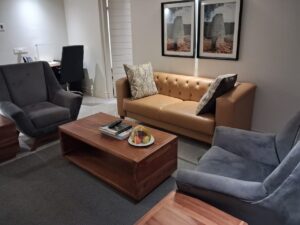
The Diplomatic Suite is expansive without being excessive. A modern lounge greets you first, anchored by a proper working desk and an office chair that immediately signal this is a space designed for people who still need to make decisions, draft speeches or prepare for the next meeting.
Two framed images of Great Zimbabwe, the ancient stone city that gave Zimbabwe its name, and subtle decorative touches quietly root the room in Zimbabwean identity.
The seating area combines a leather two-seater sofa with contrasting fabric armchairs, creating a space equally suited to reading, hosting a visitor or holding an informal business conversation.
The high ceilings and efficient air conditioning create a sense of openness often absent in many city hotels.
A visitor’s bathroom sits discreetly off the entrance.
 Then comes the dining room.
A six-seater table occupies the centre while an extraordinary lighting installation hangs from the ceiling, resembling either the roots of an ancient tree or the branches of a baobab. A large wooden-framed mirror adds warmth to the room while a framed image of a baobab tree sits near the kitchenette.
The kitchenette itself is modern and practical, fitted with a microwave and refrigerator. Only a few additional plates and utensils would complete the experience.
 The bedroom was perhaps the greatest surprise.
It is exceptionally spacious, larger than many hotel rooms I have stayed in internationally. Full built-in wardrobes, elegant wall finishes and floor-to-ceiling curtains create an atmosphere that feels residential rather than temporary.
The ensuite bathroom is equally spacious and fitted with modern amenities.
As the guest relations officer walked me through the room, another thought emerged.
The Diplomatic Suites are more than hotel rooms.
They feel like homes away from home.
After a long day that included attending a diplomatic function, I made myself a cup of coffee and settled in for the evening.
The following morning, I descended to Harvest Garden Restaurant for breakfast.
I never got around to asking anyone’s name because everyone greeted guests with the hotel’s now familiar refrain: ‘Refreshing morning, refreshing day.’
The buffet was extensive, offering something for almost every palate. More importantly, it created a natural networking environment. By the end of breakfast, I had already made two new acquaintances.
That, perhaps, is one of Rainbow Towers’ greatest strengths.
It understands the rhythm of diplomacy and business travel.
People do not simply come here to sleep.
They come to connect.
The rest of the day was dedicated to work before venturing briefly into town.
In the evening, I returned needing nothing more than a quiet soft drink and wandered into Aviator’s Bar.
It is not a large space, but it is thoughtfully designed. I particularly liked its long rectangular counter, allowing several guests to comfortably gather around it at the same time.
I did not stay long.
As a lifelong Lionel Messi admirer, I discovered Cristiano Ronaldo had scored another brace for Portugal and the eternal debate over football’s greatest player had once again resurfaced.
Rather than be drawn into another endless argument, I collected my drink and retreated to my sanctuary upstairs.
On my final morning, having overslept before an early appointment, I requested a packed breakfast and prepared to check out.
As I closed the door behind me, I realised something unexpected.
I felt renewed.
Re-energised.
Ready for the months ahead.
It was a peculiar feeling because I felt as though I was leaving a resort rather than a city hotel.
Here was a place sitting on the edge of Harare’s central business district, yet somehow insulated from its noise and urgency.
Close enough to remain connected to the city, yet sufficiently removed to create room for reflection.
I arrived looking for solitude.
I left having rediscovered a place I had long overlooked.
My only regret was that I had stayed only two nights.
I wish I had stayed longer.