


TAURAI MHAKA
President Hakainde Hichilema’s re-election has opened another chapter in Zambia’s democratic journey, with the President placing development, national unity and a commitment to serve all citizens at the heart of his second-term message.
For Zambia, the significance of the 2026 general election extends beyond the return of President Hakainde Hichilema for a second term. It also lies in the expectations that accompany another five-year mandate in a country where economic pressures, a competitive opposition and a longstanding tradition of electoral politics continue to shape its democratic journey.

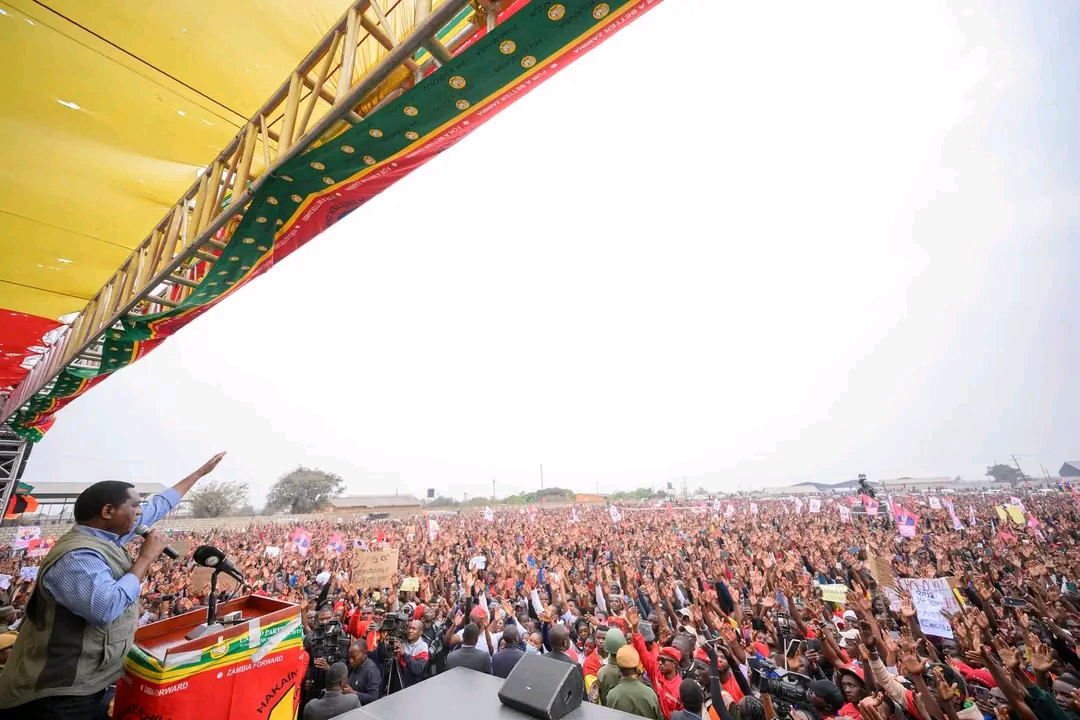
“We are truly humbled by the trust you have placed in our hands, to hold our nation’s highest office and to be your servant, once more,” President Hichilema said. “This election showed the world who we are: a nation of peace, a nation of law and order, a democratic nation that settles our differences at the ballot box, and nowhere else.”
Rather than dwelling on the victory itself, the President’s message looked towards the responsibilities of another term — development, national unity and ensuring that progress reaches communities throughout the country.
That included an acknowledgement of the substantial number of Zambians who chose his opponents.
“To those citizens who preferred the ideas presented by our opponents, we hear you, and we will continue to work for you to ensure that every Zambian benefits from the development we are delivering,” he said.
The message carries particular significance against the economic and social issues that shaped the election. The joint African Union-COMESA Election Observation Mission identified the cost of living, youth unemployment, poverty, socio-economic discontent and political polarisation among the factors surrounding the vote.
President Hichilema said travelling through all 116 districts during the campaign had given him a first-hand view of those challenges, from Zambia’s cities and compounds to its villages and farms.
“We saw first-hand the challenges that our people are facing, and we resolved to work with you to solve these challenges, together,” he said.
That experience, he suggested, would inform the priorities of his renewed mandate.
“Now we must work harder than ever before to deliver meaningful development for every single Zambian, in every corner of our country.”
Peaceful vote, but concerns remain
The President’s description of Zambia as a country that settles its political differences through the ballot box was broadly reflected in African observer assessments, although the missions also identified concerns requiring attention.
AU-COMESA reported peaceful and orderly voting in 98.6 per cent of the 740 polling stations it observed. The ICGLR mission, headed by former Botswana President Mokgweetsi Masisi, similarly described the processes it observed as largely “transparent, fair, legal and peaceful”.
Beyond polling day, SADC recorded complaints that public broadcaster coverage favoured the governing party and concerns that cyber-related legislation had constrained online political expression. It also received allegations of the use of public resources for campaigning, including government vehicles and aircraft, food parcels and increases in bursaries and allowances.
The missions also highlighted weaknesses in the electoral framework. AU-COMESA questioned the late passage of electoral legislation and the absence of a law specifically regulating political parties, while SADC recorded stakeholder concerns over the appointment process for Electoral Commission commissioners. SADC nevertheless said the ECZ had acted professionally within the existing legal framework.
Operational challenges included late opening of some polling stations, long queues and slow voter processing. SADC and ICGLR also raised concerns over practices that could potentially allow ballots to be linked to individual voters.
Lessons from a competitive election
The period following voting also tested the institutions and political actors involved in the election.
The Electoral Commission temporarily suspended counting and the announcement of results on 14 August, citing security concerns. ECF-SADC reported threats of violence against polling staff and, in some instances, the theft of marked ballot papers. Counting subsequently resumed.
AU-COMESA noted that Mundubile publicly claimed victory before the ECZ had announced the results, saying the developments contributed to mistrust, political tension and incidents of violence.
As tensions rose, heads of regional observer missions engaged the main opposition and ruling party, urging both sides to de-escalate, avoid premature declarations and inflammatory language and respect the electoral process. Former President Masisi said both sides agreed to the appeal.
The episode also produced a broader reflection from the ICGLR mission on the importance of public confidence in elections.
“A credible election is not solely the technical act of counting ballots; it is the public assurance that every lawful vote will be respected and that procedures are followed transparently,” former President Masisi said.
The observer missions have consequently left Zambia with recommendations extending into the next electoral cycle. SADC called for legislation governing political party registration, management, funding and accountability, earlier adoption of electoral reforms and greater media equity. AU-COMESA similarly recommended broader consultation on electoral reforms and stronger political party and campaign finance accountability.
The promise of a second term
For President Hichilema, however, the central message after the election was about what comes next.
His statement repeatedly returned to development, progress, unity and cooperation, with the President invoking the children he encountered during the campaign as a reminder of the longer-term responsibility attached to another five years in office.
“As we return to work as your servant, we carry with us the memories of the children we met throughout the campaign, and we commit to building a better Zambia for all of you to inherit,” he said.
The renewed mandate gives the President another term to pursue that development agenda. It also comes with the voices of the millions who backed his opponents and the economic concerns that featured prominently during the election.
President Hichilema has presented unity as central to meeting those challenges, saying his administration would devote its energies to “development and progress, strengthened by unity, cooperation and our shared purpose as one nation”.
It is a message that connects his second-term ambitions with one of Zambia’s enduring national ideals — that political competition need not diminish a shared national purpose.
“After a hard-fought campaign, the people have spoken and we now turn our focus to building even greater peace and prosperity, and we remain One Zambia, One Nation, One people,” said President Hichilema.