


SAMANTHA MADE
Africa has no shortage of development ambitions. From the United Nations Sustainable Development Goals (SDGs) to the African Union’s Agenda 2063, the continent has established frameworks aimed at improving infrastructure, livelihoods and economic opportunities.
The challenge, however, is turning those ambitions into practical results that people can experience in their daily lives.
Zimbabwe’s Minister of National Housing and Social Amenities, Professor Paul Mavima, says stronger links between policy, engineering, investment and implementation are needed if Africa is to accelerate sustainable development.
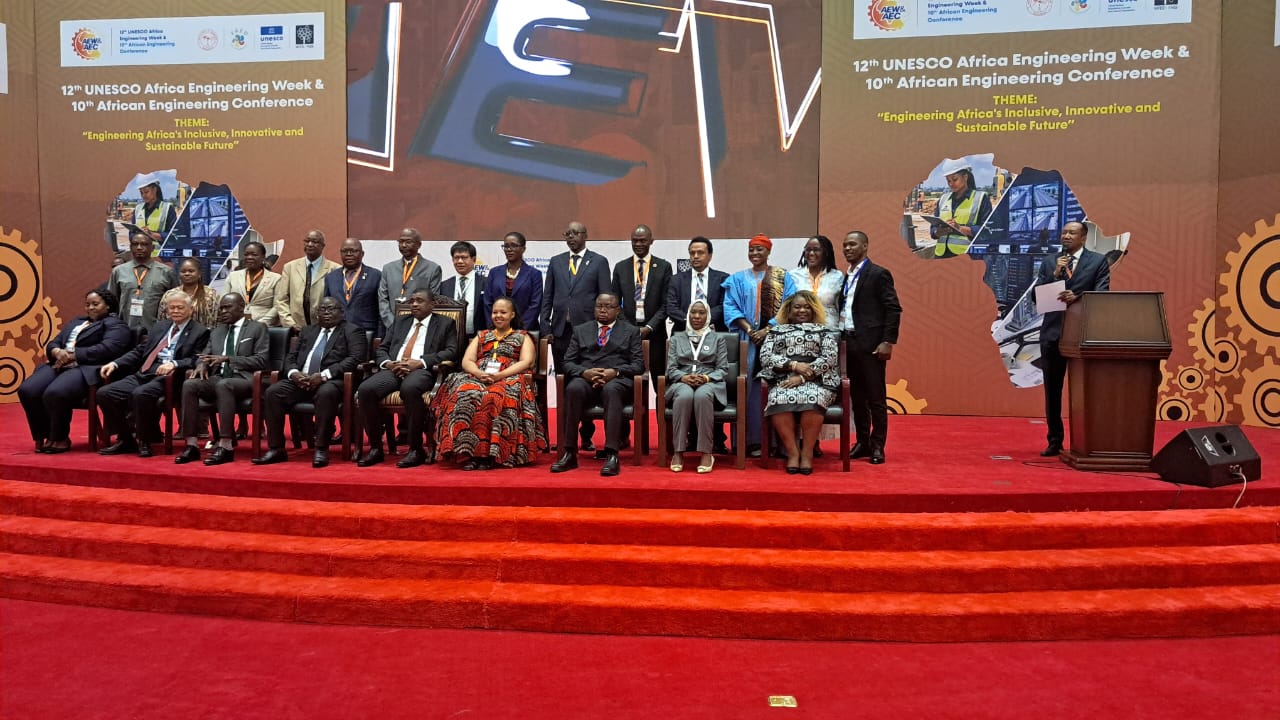
Speaking at the 12th UNESCO Africa Engineering Week and 10th Africa Engineering Conference in Dar es Salaam, Tanzania, under the theme “Engineering Africa’s Inclusive, Innovative and Sustainable Future,” Prof Mavima said development commitments would have limited impact if they were not translated into practical solutions.
“Policy alone does not deliver development. We need to connect policy to engineering, engineering to investment, investment to implementation, and implementation to measurable development outcomes,” he said.
For communities across Africa, that connection has direct implications for some of the continent’s most pressing needs, including affordable housing, reliable energy, efficient transport, access to water and resilient cities.
Engineering provides the link between what governments set out in policy and what people ultimately experience on the ground.
A policy on affordable housing, for instance, only begins to change lives when it results in homes that are accessible and suitable for the people who need them. Similarly, plans to improve energy, water and transport infrastructure require technical expertise, financing and effective implementation before they can deliver meaningful benefits.
Prof Mavima therefore challenged African countries to rethink their position in the global technology landscape, arguing that the continent must move beyond being primarily a consumer of technologies developed elsewhere.
“Africa cannot afford to remain primarily a consumer of technologies developed elsewhere. Africa must also become a creator,” he said.
Developing home-grown engineering solutions could have wider economic benefits, particularly if African countries can move from designing solutions to manufacturing and exporting them.
Such an approach could allow African engineers and institutions to develop technologies that respond more closely to the continent’s infrastructure needs, environmental conditions, available resources and economic realities.
But building this capacity requires more than government action.
Prof Mavima called for stronger collaboration among governments, universities, research institutions, industry and professional engineering bodies to develop technologies suited to African challenges.
Financial institutions also have a role to play in helping promising ideas move beyond research and prototypes into businesses, industries and large-scale infrastructure projects.
Human capital will be equally important.
Africa’s young population represents a significant pool of potential engineers, innovators and entrepreneurs. Expanding opportunities for young people to study engineering and gain practical experience could strengthen the continent’s ability to design, build and maintain its own infrastructure.
Prof Mavima also stressed the importance of ensuring that women and girls are part of this process, calling for greater participation and leadership by women in engineering and STEM fields.
“We cannot speak of engineering skills shortages while leaving significant portions of Africa’s human capital outside the engineering economy,” he said.
The challenge, therefore, is not simply to produce more engineers, but to create an ecosystem where engineering knowledge can translate into innovation, businesses, jobs and infrastructure.
Prof Mavima outlined this progression as a pathway from “policy to engineering; from engineering education to engineering capacity; from capacity to innovation; from innovation to enterprise; and from enterprise to infrastructure and sustainable development.”
For African countries seeking to turn development commitments into tangible improvements in people’s lives, building local engineering capacity will be critical.
The goal, Prof Mavima said, is not to isolate Africa from the rest of the world, but to ensure that Africans have a leading role in shaping the technologies and infrastructure that will define the continent’s future.
“The future of Africa should not be engineered elsewhere. It must be engineered here, by Africans, for Africans, with the world as our partner.”