

SAMANTHA MADE
Six young athletes who have experienced displacement will compete as the Refugee Olympic Team at the Dakar 2026 Youth Olympic Games. They will arrive with sporting ambitions of their own, and with a mentor who knows what it takes to compete on an Olympic stage.
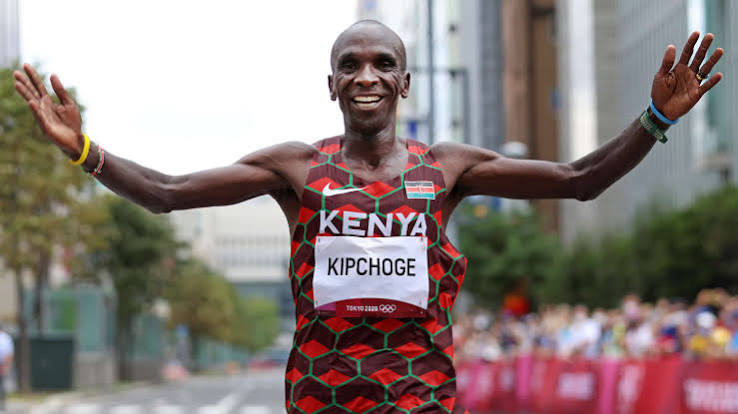
He is Eliud Kipchoge, the Kenyan distance runner who won consecutive Olympic marathon gold medals at Rio 2016 and Tokyo 2020. Now a Global Ambassador for Dakar 2026, Kipchoge has begun working with the refugee athletes, discussing discipline, education and the values that can guide them beyond competition.
“The advice I love to give refugees is this: sport is life,” Kipchoge said. “For them, sport is a real opportunity – it gives them a platform to showcase themselves and to fight for their space.”
It will be the Refugee Olympic Team’s first appearance at a Youth Olympic Games. Kipchoge hopes its members will have the opportunity to demonstrate their abilities before an international audience. His ambassadorial role will also bring him into contact with young athletes from across the world.
“I’ve been in the sport for 24 years; it’s my time to give back to the next generation,” he said. “And the youth in Dakar are exactly the next generation I want to walk with.”
Kipchoge wants those meetings to be conversations rather than speeches from a champion. “When I go to Dakar, I’ll make sure I meet young athletes from across the world – meet them, have an honest talk, mentor them, and look at what the future of sport, and the world, looks like,” he said.
His Olympic career began on the track, with 5,000-metre bronze at Athens 2004 and silver at Beijing 2008. After turning to the marathon, he won five Berlin Marathons, four London Marathons and two Olympic titles. In 2019, he covered the marathon distance in 1:59:40 at a specially staged event in Vienna, becoming the first person to complete it in under two hours.
That experience gives weight to his message, but Kipchoge is focused on what the young athletes can do with their own opportunity.
“My message to these young people is that this chance is the key,” he said. “It’s their time to fight for their space – and that space is happening in Dakar. Let’s fight for it, show your ability, in the universal language of sport.”
Dakar will host the first Olympic sporting event staged in Africa. Kipchoge sees significance in young athletes competing on the continent and meeting peers whose lives and routes into sport may differ from their own.
“Dakar 2026 is a huge event on our young continent – something we’ve long waited for here,” he said. “Being the first, it will stay vivid in the minds of young people and the general public for a very long time.”
He hopes the connections formed there will last beyond the competition. “It’s about mixing with the world in order to understand it,” Kipchoge said. “That will be the best thing for us, to realise the world is all around us.”
His work with the refugee athletes has already given him a way to put that belief into practice. “Mentoring the Refugee Team means a lot to me,” he said. “I talked to them about the importance of having the right values in your life, your education and your sport – the real recipe for success, and what success means in sport and in life.”
Around 2,700 athletes aged up to 17 are expected to compete across Dakar, Diamniadio and Saly from 31 October to 13 November 2026. For the six members of the Refugee Olympic Team, the Games will offer a chance to compete on their own terms and be recognised for their abilities.