

TAURAI MHAKA
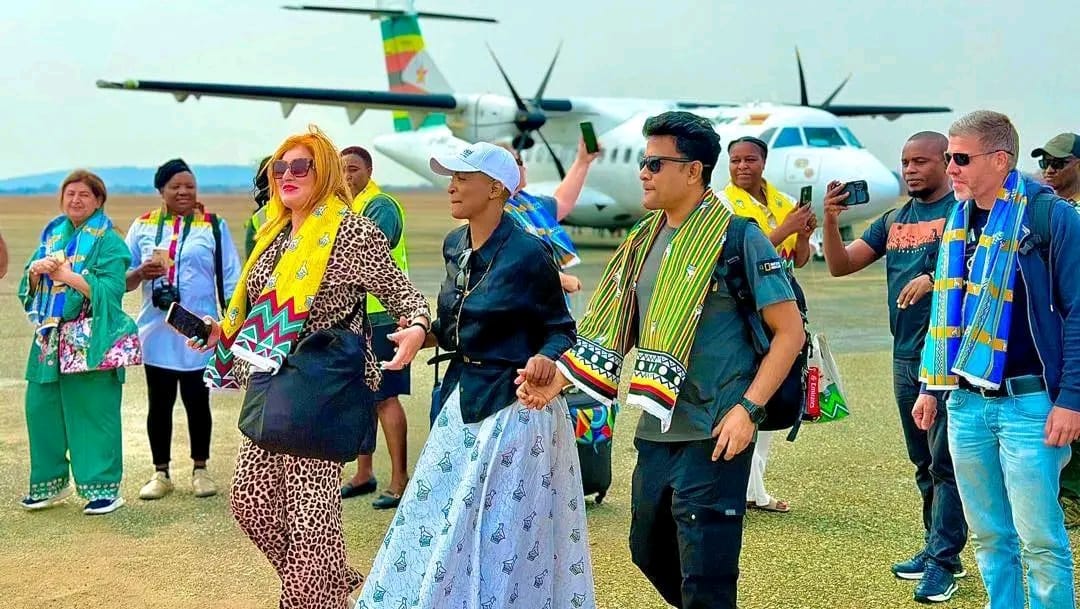
During a media familiarisation tour of Gonarezhou National Park ahead of Sanganai/Hlanganani/Dzimbahwe 2026, journalists encountered a bull elephant at close range as they travelled through the park.
It was one of several experiences arranged for international buyers and media before the country’s main tourism fair opened in Masvingo — taking visitors beyond the destinations most commonly associated with Zimbabwe and into the landscapes, communities and tourism products they had come to see and, in the case of buyers, potentially sell.
When H.E. President Emmerson Mnangagwa officially opened the 19th edition of Sanganai, he placed that wider tourism offering at the centre of his message.
“The imposing Great Zimbabwe Monument is a reminder that Zimbabwe’s tourism products extend beyond the celebrated wildlife and majestic Victoria Falls,” the President said.
He pointed to history, cuisine, music, arts, culture and hospitality as part of the country’s wider tourism offering, while calling for the expo to translate into investment, tourism infrastructure, new products and improved livelihoods.
Tourism and Hospitality Industry Minister Barbara Rwodzi had brought a similar message to Masvingo in the weeks preceding the main exhibition. Sport, gastronomy and a street carnival were held around the city, while buyers and journalists travelled to attractions across the province.
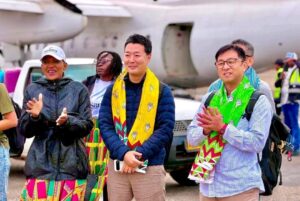
“This devolution is telling the world that tourism is not only in Victoria Falls but all over the country,” Minister Rwodzi said.
For Masvingo, that also meant looking beyond Great Zimbabwe.
Beyond the ancient walls
The ancient stone city, about 30 kilometres from modern Masvingo, remains the province’s best-known attraction. Around it, guides, craftspeople, traders and tourism businesses have long depended on visitors drawn by its history.
A short distance away, Lake Mutirikwi presents a different landscape. Further south, the road descends into the hotter Lowveld, through sugar-growing country and towards Gonarezhou National Park.
Gonarezhou has established itself within Zimbabwe’s safari market, including among higher-value travellers drawn by its wilderness, wildlife and relative seclusion. Its tourism experience is markedly different from Great Zimbabwe’s heritage offering, yet both can form part of the same journey through Masvingo Province.
Shaheemah Clarke, a product development specialist with South Africa-based Amazing Africa, told local media after spending five days touring the province that her itinerary had taken her through Triangle, Gonarezhou National Park and Great Zimbabwe. She described the misty conditions during her visit to the ancient city as particularly memorable.
German tour operator Philipp Därr similarly told local media that travelling through Zimbabwe had helped him understand both established and emerging tourism products, activities available to visitors and the country’s safari offering. Beyond the wildlife, he said he had been struck by the hospitality he encountered during the journey.
For buyers, such familiarisation tours provide something an exhibition stand cannot: an opportunity to experience the roads, accommodation, guides, food, distances and attractions that eventually determine whether a destination can be packaged for clients.
When Sanganai came into town
Sanganai’s presence was also felt away from Masvingo’s tourism attractions.
Students from around the country participated in a Sports Tourism Carnival, while the Gastronomy and Cultural Carnival brought food, music, dancers and cultural groups into the city’s streets.
Hotels and lodges filled as buyers, exhibitors, officials, media and other visitors arrived. Masvingo Provincial Affairs and Devolution Minister Ezra Chadzamira said more than 1,800 hotel and lodge rooms were taken up during the expo.
For accommodation providers, restaurants, transport operators, guides and traders, the increased numbers brought immediate business. The longer-term test will be whether Masvingo can convert that temporary traffic into regular visitor flows.
Minister Chadzamira said the province wanted tourism revenues to reach local communities alongside improvements in infrastructure.
The commitment is significant beyond the formal tourism industry. Around Great Zimbabwe, visitor spending supports guides, craftspeople and traders. Restaurants require food and workers, accommodation establishments need suppliers and longer stays generate demand for transport and other services.
President Mnangagwa said this would ultimately be the measure of the expo.
“The momentum generated by this event must translate into lasting tourism infrastructure, investment, product development and ultimately an improvement in the quality of life for our people.”
Seeing before selling
Sanganai attracted 405 exhibitors, 125 international buyers and 28 local buyers, with international participants drawn from markets including China, India, Japan, the United States, Germany, Britain and the Middle East.
Some buyers arrived knowing Zimbabwe through its established tourism attractions. Others brought very different points of reference. A Pakistani buyer visiting for the first time told local media that her childhood association with Zimbabwe had largely been through cricket. Her visit provided an opportunity to encounter the country as a tourism destination.
Foreign Affairs and International Trade Minister Professor Amon Murwira placed such international engagement within Zimbabwe’s broader diplomatic and economic objectives.
“We are integrating tourism diplomacy as a strategic weapon in our war against poverty,” Minister Murwira said.
He linked visitor arrivals to employment, community development and infrastructure, placing tourism promotion within the work of Zimbabwe’s diplomatic missions and international engagement.
First Lady Dr Auxillia Mnangagwa, Zimbabwe’s Tourism Patron, also used the closing stages of Sanganai to emphasise employment, community participation and sustainable investment. Her focus on gastronomy highlighted the less visible tourism chain connecting visitors with farmers, food producers, restaurants, women entrepreneurs and small businesses.
Beyond the exhibition hall
Sanganai remains smaller than Africa’s Travel Indaba in Durban and WTM Africa in Cape Town, both established as major continental marketplaces attracting larger numbers of international travel professionals and buyers.
The Masvingo edition, however, demonstrated a different aspect of the Zimbabwean fair. Its rotation between provinces allows trade meetings to take place alongside familiarisation tours, giving buyers and media direct exposure to the destination hosting the event.
For Masvingo, the impact will become clearer after the expo.
Tourism operators will be watching whether buyers return with clients, whether visitors to Great Zimbabwe spend another night around Lake Mutirikwi and whether more itineraries extend south into the Lowveld and Gonarezhou.
For the city’s accommodation providers, restaurants, guides, craftspeople and other businesses, the same questions are measured more simply: whether there are more visitors, whether they stay longer and whether they spend more within the local economy.