
SAMANTHA MADE
The widening gap between those who hold the world’s greatest share of wealth and those struggling to access basic services is increasingly being treated as more than an economic problem, with world leaders warning that global inequality is threatening social cohesion, democracy and sustainable development.
Governments and international organisations have called for stronger international action to understand and address the structural causes of inequality, while backing a proposal for the creation of an International Panel on Inequality (IPI).
For South Africa, the issue has become a central part of its multilateral agenda.
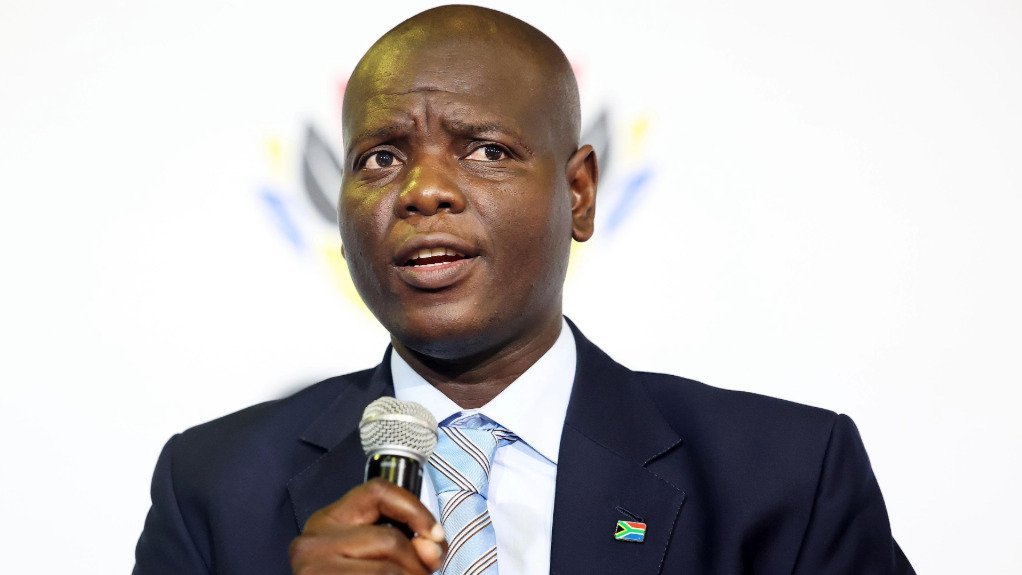
South Africa’s Minister of International Relations and Cooperation, Ronald Lamola, said the country was seeking to translate the findings of the 2025 G20 Independent Experts Committee on Global Inequality into a longer-term international mechanism for tackling inequality. The committee, chaired by Nobel Prize-winning economist Professor Joseph Stiglitz, was established during South Africa’s G20 presidency.
Summing up one of the committee’s conclusions, Lamola said: “Inequality is a choice and it can be reversed with political will.”
He argued that the consequences extended beyond economic development.
“Inequality within and between countries corrodes democracy, social cohesion and sustainable development,” Lamola said. “It erodes trust in institutions, fuels instability and undermines human dignity.”
Lamola called for coordinated multilateral action based on solidarity and shared responsibility. He said: “For South Africa, inequality must be treated as a global emergency.”
The proposed International Panel on Inequality is intended to give that cooperation a stronger evidence base. According to Lamola, it would produce periodic assessments of inequality, particularly income and wealth inequality, and bring together expertise from around the world.
“The IPI will serve as a trusted source of knowledge, a convener of expertise and catalyst for action,” Lamola said.
South Africa has called on UN member states to support an intergovernmental process to establish the panel while safeguarding the independence of its future work.
President Cyril Ramaphosa also placed the proposal within the broader struggle against extreme inequality. In a message to the gathering, he described the objective shared by countries supporting the initiative.
“We welcome you as leaders of nations that are united by a common cause to overcome extreme inequality,” President Ramaphosa said.
He then drew on the words of former South African president Nelson Mandela to argue that persistent poverty and inequality undermine the possibility of freedom and peace. Quoting Mandela, President Ramaphosa said: “For as long as poverty, injustice and gross inequality persists in our world, none of us can truly be free and be fully at peace.”
President Ramaphosa urged supporters of the proposal to turn political backing into multilateral action.
“The task before us is a formidable one, to build a new multilateral frontier and expand our global coalition against inequality,” he said.
He argued that the establishment of the panel, once a distant ambition, was increasingly within reach. “The time for an international panel on inequality is now,” President Ramaphosa said.
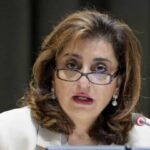
The United Nations has also warned that the inequality crisis is becoming increasingly complex. UN Deputy Secretary-General Amina Mohammed described what she called “breathtaking levels of income and wealth inequality”, alongside unequal access to housing, healthcare, nutrition and education.
Mohammed warned that emerging technologies could deepen those divisions if their economic benefits remained concentrated among a small number of people and countries.
“The breakneck emergence of frontier technology and the concentration of this technology’s wealth and power in a tiny number of hands could unleash global inequality at a scale far beyond anything that we have seen,” she said.
Her warning brings artificial intelligence and other emerging technologies into the wider inequality debate, particularly as countries differ in their access to digital infrastructure, investment, skills and technological capacity.
Mohammed also linked inequality to the distribution of political and economic power. “Unchecked inequality will further corrode democracy as the ultra-wealthy and companies take control, wield outsized influence over the media and information landscape,” she said.
The UN’s proposed response extends beyond the creation of a research body. Mohammed called for investment in education, healthcare, social protection and decent work, alongside fairer tax systems and stronger cooperation on development finance, trade and investment.
She also called for reform of the global financial architecture and stronger enforcement of international rules, particularly where corporations and high-net-worth individuals operate across borders. Mohammed said gender equality would be central to that work and called for artificial intelligence to be accessible to, and governed by, all countries.
Brazil’s experience has also shaped the push for international action. Brazil’s Minister of Foreign Affairs, Mauro Vieira, told the gathering that the concentration of wealth had consequences beyond the distribution of economic resources.
“Inequality is one of our most urgent concerns,” Minister Vieira said.
Pointing to the growth of billionaire wealth in 2025, Minister Vieira warned that extreme concentration could affect political and social systems.
“When wealth and power become extremely concentrated, inequalities threaten social and political cohesion, trust in institutions, and the very ability of states to guarantee rights,” he said.
Minister Vieira also argued that income alone could not capture the full extent of inequality. “In many of our societies, economic inequalities intersect with inequalities based on gender, race, geography, social background, and many other forms of discriminations,” he said.
Brazil placed inequality at the centre of its G20 presidency in 2024, when it launched the Global Alliance Against Hunger and Poverty and adopted the first G20 ministerial declaration on reducing inequalities.
Minister Vieira said Brazil supported the proposed panel because it could bring together knowledge from different regions and disciplines. “We seek to transform fragmented knowledge into shared knowledge and evidence into effective public policies,” he said.
Spain’s Minister for Foreign Affairs, European Union and Cooperation, José Manuel Albares, drew attention to the financial constraints facing many developing countries.
“Inequality is one of the defining challenges of our time, and data speaks volumes,” Minister Albares said.
He argued that addressing the problem required more than a focus on economic growth. “Fighting inequality is a complex endeavor. It requires a multidimensional approach that goes well beyond the average GDP per capita of a country,” he said.
Minister Albares identified debt as one obstacle to reducing inequality in developing countries. “Many developing countries face high debt services burdens that severely constrain their fiscal space to address precisely inequalities,” he said.
Spain has advocated stronger international tax cooperation, including efforts to address tax evasion and avoidance and ensure that wealth and corporate profits are taxed where value is created. Minister Albares also called for improvements to the international debt architecture.
He argued that the scale of the problem demanded cooperation. “No single government, no single institution, no single organization can address inequalities alone,” Minister Albares said.
That argument ran through the gathering as speakers connected inequality to taxation, debt, trade, technology, development finance and access to basic services.
Supporters of the International Panel on Inequality want it to provide independent research that can help governments understand the causes and consequences of inequality and turn that evidence into policy. For South Africa, Brazil and Spain, the next step identified at the gathering was to build sufficient support among UN member states for the proposal.
The wider challenge extends beyond establishing a new institution: whether international cooperation can keep pace with the economic, technological and social forces reshaping the distribution of wealth and power.
Lamola framed the decision facing governments as a political one. “We call upon the international community to join us in forging a new consensus that rejects exclusion and disparity and embraces common prosperity and shared humanity,” he said.
The deliberations took place at a high-level event on the margins of the 81st United Nations General Assembly. Representatives from South Africa, Brazil, Spain, Norway and the United Nations gathered to discuss the global inequality crisis and the proposed International Panel on Inequality.