


SAMANTHA MADE
A journalist may stop posting her work. A candidate may withdraw from public debate. A girl may decide that sharing her ideas online is unsafe. At a ministerial roundtable held during the United Nations General Assembly’s high-level week, speakers warned that technology-facilitated violence can have consequences far beyond a screen.
The G77 and Emerging Partners Ministerial Roundtable on Technology-Facilitated Violence Against Women and Girls, co-hosted by UN Women and Croatia, brought together government representatives, a survivor advocate and other participants to discuss prevention, legal protection, support for survivors and the responsibilities of technology companies.
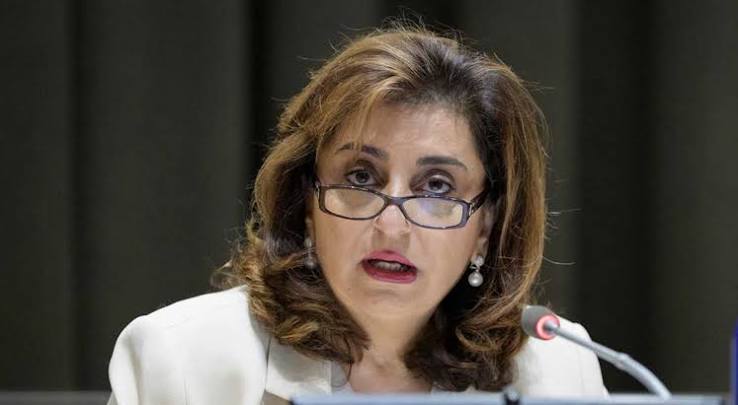
“Digital technology has opened new doors for women and girls. It connects them to education, to work, services, and public life. We want those doors to remain open and to open wider,” said UN Women Executive Director Sima Bahous. “Yet, many women and girls face threats and abuse when they step through them.”
Bahous said the harm could follow women into their homes, workplaces and communities. Citing a UN Women survey of women in public life, she said seven in ten respondents had experienced online violence linked to their work, while four in ten reported related harm offline.
“We all lose when women are pushed out. We lose a journalist’s reporting, a candidate’s leadership, a girl’s idea,” she said.
Croatian Prime Minister Andrej Plenković told the roundtable that artificial intelligence could make abusive material easier to create, copy and distribute. He called for stronger laws and enforcement, greater accountability from digital platforms, more research and cooperation between countries, as well as education aimed at preventing abuse.
“Online violence is not simply a digital problem. It causes profound and prolonged psychological, social, economic, and physical harm,” he said. “Very often, what begins online does not remain online.”
Survivor advocate Sharlina Arapuro described how the effects of abuse involving technology can persist long after the original act. Drawing on her experience of childhood sexual abuse, she urged those at the roundtable to consider what protection survivors needed before harm occurred.
“We need to stop treating online violence as though it has less harm, because it doesn’t,” Arapuro said. “The abuse I survived did not end when the act itself ended. It just got worse. It followed me and it still follows me.”
She called for laws addressing AI-generated child sexual abuse material and non-consensual sexual deepfakes, along with systems to prevent, detect and remove abusive content. Survivors, she said, should be involved in shaping the response: “Do not ask what happened to us. Ask what would have protected us.”
Croatia’s Minister of Foreign and European Affairs, Gordan Grlić Radman, said his country had criminalised the misuse of sexually explicit recordings, including their non-consensual distribution, and had set procedures involving police, justice, health and social welfare services.
“One lesson stands out clearly. Technology-facilitated violence is not virtual. Its consequences are entirely real,” he said. “That is why our actions cannot be confined to a single government institution, a single sector or a single country.”
Nigeria’s Minister of Women Affairs, Hajiya Imaan Sulaiman-Ibrahim, said her country was reviewing laws to address cyberstalking, online harassment, impersonation, sextortion and image-based abuse. The review would also examine how offences and jurisdiction are defined, the duties of service providers and the remedies available to survivors.
“The digital space may be new, but the violence is not,” she said. “Technology has changed the tools used to perpetrate abuse on our women and girls. It has not diminished the state’s responsibility to protect the women and girls.”
Sulaiman-Ibrahim said laws would have limited effect without coordinated reporting, investigations, evidence preservation and support services. “Prevention must begin before the first click, not after the first crime,” she said.
Bangladesh’s Minister of State for Foreign Affairs, Shama Obaid, told the roundtable that her country had convened a dialogue to develop voluntary guidance for states on preventing, investigating and remedying digital harassment. She called for cooperation beyond national borders, saying laws alone would not be enough.
The discussions at the UN examined how governments and platforms should respond.
Political campaign strategist and crisis communications adviser Dr Delta Ndou brought a related question into focus at a University of Johannesburg workshop on Gendered Electoral Disinformation in East and Southern Africa (GEDESA): why women are targeted in the first place.
Ndou described technology-facilitated gender-based violence as “merely an extension of what is already pre-existing in our society”. Her observation points to the inequalities that digital tools can amplify, particularly when women who work or speak in public face attacks directed at their gender rather than their ideas.
For newsrooms, the issue is immediate. Journalists need digital spaces to report, reach audiences and take part in public debate. Bahous’s warning at the roundtable was that when abuse drives women out of those spaces, the loss extends beyond the person targeted to the public that no longer hears her voice.