


SAMANTHA MADE
Africa’s development challenge is often framed as a shortage of money. Yet across the continent, large pools of capital already exist in pension funds, banks, insurance institutions, businesses and other financial assets.
The challenge is turning those resources into productive investment that can finance development, create jobs and attract additional capital.
Zimbabwe offers a glimpse of both the opportunity and the gap. The Zimbabwe Impact Investment Map has identified 98 potential investment opportunities requiring approximately US$923 million in indicative financing across sectors including agriculture, renewable energy, financial services, manufacturing and real estate.
But identifying opportunities does not necessarily mean having the money to finance them.
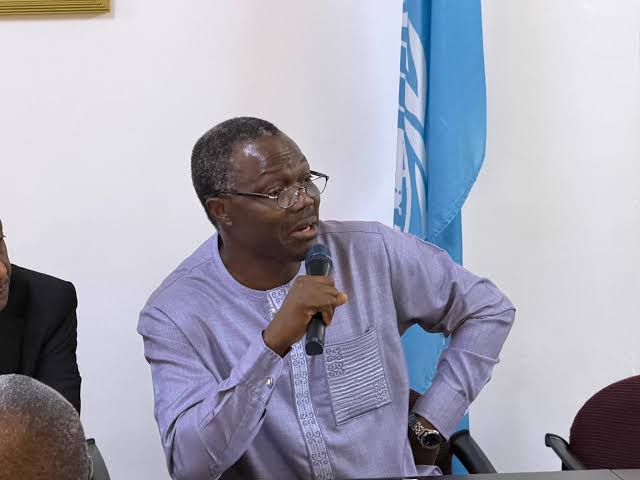
At a United Nations media breakfast in Harare, UNDP Zimbabwe Resident Representative Dr Ayodele Odusola argued that Africa needs to look more closely at how it uses the capital already within its economies, while creating conditions that can attract additional domestic and international investment.
“Domestic resources are the ones attracting international capital,” Odusola said.
For him, the starting point is not simply finding new sources of money, but making better use of existing domestic assets.
“The starting point is how do we make effective use of our domestic assets?”
Odusola pointed to pension funds, insurance resources and other financial assets that are invested outside Africa, arguing that more of these resources could potentially be directed towards productive investment on the continent.
“Africa is currently facing what we call a paradox of development finance,” he said.
While African countries need more financing for development, significant amounts of capital continue to flow out of their economies.
This creates a challenge that extends beyond the availability of money. Investors also need confidence that their capital can operate in an environment where policies, regulations and markets support productive activity.
“It is the local productive investment that builds confidence of international investors,” Odusola said.
The treatment of domestic businesses and investors can therefore influence how international capital views a market.
“If our domestic policies and regulations are deterring domestic investment, you are indirectly discouraging international investment,” he said. “Because they want to see how you treat your own, and how you treat theirs.”
Zimbabwe’s investment pipeline illustrates why this matters.
The Zimbabwe Impact Investment Map, developed by UNDP with the Zimbabwe Investment and Development Agency and technical partner CrossBoundary, identified 98 potential investment opportunities with approximately US$923 million in indicative financing requirements.
Thirty-one priority opportunities account for around US$535 million and cover agriculture, renewable energy, financial services, manufacturing and real estate.
Odusola stressed that the figures should not be interpreted as money that has already been secured.
“These figures describe a pipeline and its needs, not financing already secured, or returns that are guaranteed,” he said.
The next challenge is to turn those identified opportunities into projects that can attract finance.
That requires credible business models, clear assessments of risks and financing structures suited to individual projects, including debt, equity, guarantees and blended finance.
“Each time I discuss with the CEOs of many banks, they will tell me the problem is not having capital,” Odusola said. “The problem is having bankable projects.”
The distinction is important. Capital may exist within banks, pension funds and other institutions, but it will not automatically move into development projects. Investors need projects with viable business models, manageable risks and clear prospects for returns.
This places responsibility across the investment ecosystem.
Government has a role in creating a predictable environment for investment and addressing policies or regulations that discourage businesses from expanding. Development partners can provide technical assistance, market intelligence and mechanisms that help reduce investment risks. The private sector, meanwhile, needs to develop projects that can withstand financial scrutiny and attract funding.
The United Nations is also adapting its development work to an environment where traditional sources of development finance face increasing pressure.
The United Nations Resident Coordinator in Zimbabwe, Dr Rosemary Kalapurakal, said the UN development system had mobilised close to US$2 billion for development programmes and projects in Zimbabwe over the past five years.
The funding has supported areas including health, food security, education, climate resilience, renewable energy, employment, gender equality and digital transformation.
But as development budgets become more constrained, Kalapurakal said the next phase of cooperation would require “sharper prioritisation, stronger national ownership, new partnerships, innovative financing and more integrated approaches.”
That shift places greater emphasis on demonstrating what works and finding ways to take successful models beyond individual projects.
Odusola pointed to a UNDP-supported green village model built around a 200-kilowatt solar system as an example of how development investment can create conditions for economic activity and community services.
He said the UN should not necessarily be expected to finance the expansion of every successful initiative itself.
“The role of the UN is to show that something is doable, is a proof of concept,” he said.
The responsibility for taking viable initiatives to scale, he said, ultimately rests with government and other actors capable of mobilising larger amounts of capital.
This is where innovation in development finance becomes important.
“Innovation, then, is not necessarily the invention of a new source of money. Often it is the thoughtful use of existing public funding to reduce risk, strengthen institutions and draw in additional private investment.”
Rather than treating public funding as the only source of development finance, this approach seeks to use it strategically to create conditions in which private capital can participate.
Odusola also pointed to impact investment, where financial returns are considered alongside social and environmental outcomes.
“We are looking for impact investment that helps us to push the frontier of SDG acceleration in the world,” he said.
“We are talking about the kind of investment that will help us to achieve triple bottom lines. Economic profitability, social profitability, and environmental profitability.”
Such an approach becomes increasingly relevant as traditional development assistance and public budgets struggle to meet the scale of investment required to address development needs.
But unlocking domestic resources also requires looking beyond taxation.
Odusola argued that domestic resource mobilisation should be understood more broadly, pointing to pension funds, bank reserves and other financial assets that could potentially be directed towards productive activity.
“Taxation is a minute component of that,” he said.
“We need to wake up these sleeping capital and turn them into working capital.”
The same question applies to the informal economy, where millions of people across Africa earn livelihoods outside formal business structures.
Odusola questioned approaches to formalisation that focus primarily on imposing additional obligations on informal businesses. Instead, he argued that businesses should see tangible benefits from entering the formal economy.
“If I formalise, will you be able to link me to the banking system?” he asked.
Formalisation, he suggested, should help small businesses access financial services, entrepreneurial support and wider business networks that can help them grow.
The ability to mobilise capital is also closely linked to the availability of reliable information.
For Odusola, this is where economic journalism has a role that extends beyond reporting the launch of investment reports and development initiatives.
“Investment depends on information,” he said.
He urged journalists to examine the figures behind investment opportunities, speak to businesses and investors, investigate barriers to finance and explain what different opportunities could mean for jobs, exports and livelihoods.
“The 70-page Impact Investment Map should not be the end of a story. For a serious economic journalist, it should be the beginning of several stories.”
The investment pipeline, he said, can provide the basis for reporting on individual sectors and businesses: who needs capital, why they need it, where the financing could come from, under what terms and what the potential effects could be on the wider economy.
Kalapurakal similarly stressed the importance of independent and useful development reporting as Zimbabwe and the UN prepare for a new phase of cooperation.
“We welcome reporting that is rigorous and independent, constructive and solutions-oriented,” she said.
She urged journalists to ask “what works, what does not, why it matters, and what can be done differently.”
For Odusola, reporting on African economies should also avoid reducing the continent’s economic story to a catalogue of problems.
“One thing in Africa is that we like using the bottle as half-empty rather than the bottle as half-full,” he said.
But recognising opportunities does not mean abandoning critical journalism.
“When I say we should be very frank in our narrative, what we need to really make sure we do it in a way that does not create liability for the country we are supposed to protect,” he said.
The wider issue is how economic information can help investors understand markets while allowing citizens to see how investment decisions affect employment, services and livelihoods.
The next Zimbabwe-UN Cooperation Framework for 2027 to 2031 is expected to place greater emphasis on inclusive economic growth, decent work, climate resilience, human capital, governance, gender equality and innovative financing.
Achieving those priorities will require more than development assistance alone.
Zimbabwe’s investment pipeline shows that opportunities exist. The financing challenge is connecting those opportunities with the capital, expertise and risk-sharing mechanisms needed to turn them into functioning businesses and development projects.
For Africa more broadly, the question is not simply how to find more money.
It is also about understanding what capital is already available, why it is not reaching productive sectors and what needs to change for it to create businesses, jobs, income and wider development opportunities.
“Reimagining development financing is everybody’s business,” Odusola said.