


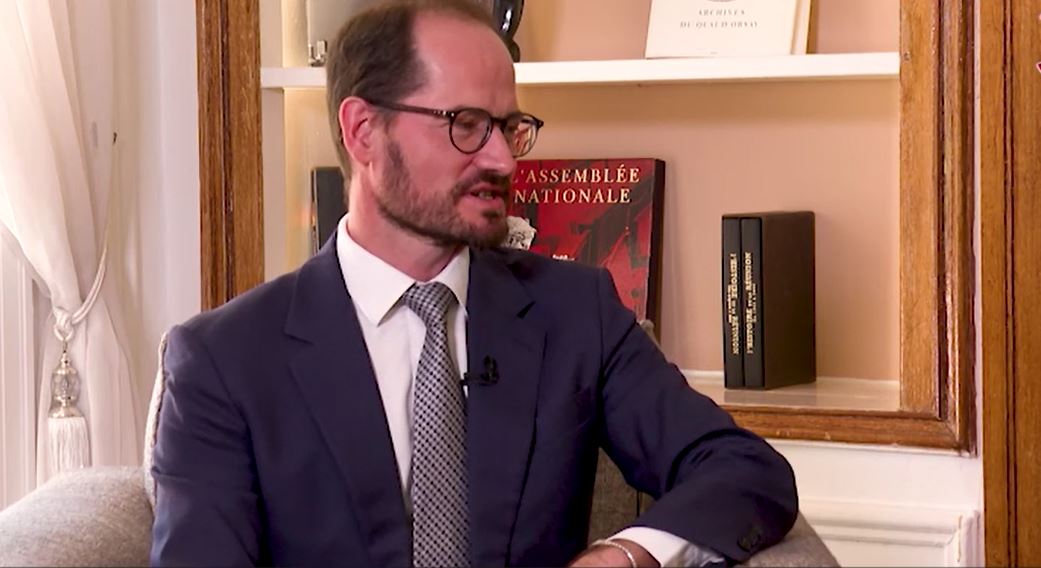
In this interview, the The Diplomat Africa spoke with France’s Ambassador to Zimbabwe, His Excellency Mr Paul Bertrand Barretz, a seasoned environmental diplomat who reflects on how his experience in multilateral climate negotiations now informs France’s cooperation with Zimbabwe on conservation, science and heritage protection. This feature presents selected excerpts from a wider conversation that also explored economic, educational and cultural cooperation between the two countries. Notably, the discussion anticipated several key issues later reinforced at COP30 and the G20 Summit in South Africa, where global leaders renewed focus on climate change, biodiversity loss and sustainable development.
Your Excellency, your diplomatic career spans European, multilateral and environmental diplomacy. How has this shaped your engagement with Zimbabwe?
Before coming to Zimbabwe, I was deeply involved in environmental diplomacy. I advised different ministers on major global challenges such as biodiversity loss and climate change and contributed to the preparation of COP15 in Paris. I also organised the One Planet Summits, including a forest summit in Gabon focused on conservation as a tool to combat climate change and biodiversity loss.
This experience has been extremely useful in Zimbabwe. More than a quarter of the country’s territory is under conservation and its biodiversity is exceptionally rich. Zimbabwe is therefore a very relevant partner for implementing, at national level, ideas and policies developed in global forums. It allows us to move from discussion to action, particularly in areas such as conservation, climate resilience and green finance.
What opportunities do you see for deeper cooperation on conservation and climate action?
There is significant potential. The European Union, including France, has strong expertise in green finance and sustainable investment. On the other side, Zimbabwe has vast natural capital and long-standing experience in conservation. Bringing these strengths together creates opportunities to support biodiversity protection while also promoting sustainable economic development.
Scientific research plays a key role in environmental policy. How is France supporting this in Zimbabwe?
Scientific cooperation is central to our approach. French research institutions such as CIRAD, IRD and CNRS have worked in Hwange National Park for decades. Recently, they established a new platform that encourages interaction between researchers and local communities. It includes a library, computer facilities and meeting spaces where knowledge about biodiversity and conservation can be shared.
We also inaugurated a new laboratory in partnership with the University of Zimbabwe, dedicated to anticipating zoonotic diseases, those transmitted from wildlife to humans. This is an important contribution to public health, environmental monitoring and understanding the complex relationship between people and wildlife.
Climate shocks have affected food security in Zimbabwe. How has France responded?
Following droughts linked to the El Niño phenomenon, France partnered with FAO and World Vision to implement a one million euro food security project in Masvingo Province. The programme supports household gardening, agricultural skills development and nutrition, particularly for vulnerable families and young children.
I recently visited the project and was encouraged by what I saw on the ground. It demonstrates how targeted climate response programmes can strengthen community resilience and deliver tangible benefits.
Wetlands have emerged as a regional priority following COP15 in Victoria Falls. What is France’s involvement?
Wetlands are vital ecosystems. France is supporting the Chevute Wetland Conservation Programme, working with NGO partners and in alignment with Zimbabwe’s national priorities. This initiative builds on the momentum generated by COP15 on wetlands held in Victoria Falls and reflects our commitment to practical, locally grounded conservation efforts.
Finally, how does cultural and natural heritage fit into this broader environmental partnership?
Protection of heritage is at the heart of French diplomacy. In Zimbabwe, the Great Zimbabwe Site is a World Heritage Site and one of Africa’s most important historical landmarks. France is supporting the construction of a new visitor centre that will meet international standards and enhance preservation, interpretation and tourism.

