

In parts of rural Kenya, a growing movement is challenging harmful traditions and proving that empowering girls is not a women’s issue alone
Eugene Uwimana
For generations, conversations about female genital mutilation, child marriage and girls’ rights have largely centred on women and girls themselves.
Yet in parts of rural Kenya, a growing number of men are demonstrating that lasting change may depend just as much on the choices men make.
In Narok County, home to a large Maasai population, one man has spent nearly three decades challenging deeply rooted traditions that continue to affect thousands of girls.

Patrick Ngigi never planned to become an activist. He was a school headteacher in 1997 when a student approached him seeking help to avoid an arranged marriage. With no rescue facilities available, he took the girl to his mother’s home.
That decision would eventually grow into Mission with a Vision, a rescue centre that has helped around 3,500 girls escape female genital mutilation (FGM), child marriage and other forms of gender-based violence. Today, the organisation operates facilities that can accommodate up to 120 girls.
His story highlights a broader shift taking place across parts of Africa, where traditional notions of masculinity are increasingly being challenged by men who see protecting girls’ rights as a responsibility rather than a threat to culture.
The cost of harmful traditions
Despite significant progress in recent years, FGM remains a reality for many girls across Africa.
In Narok County, more than half of girls are still believed to undergo the practice, despite Kenya’s legal ban and sustained awareness campaigns. The practice often increases the risk of child marriage, school dropout and long-term health complications.
For many girls, escaping these pressures means choosing between family expectations and their future.
One resident at the rescue centre, Cynthia, fled the practice with her younger sister when she was just 11 years old.
Today, she works at the centre supporting other girls.
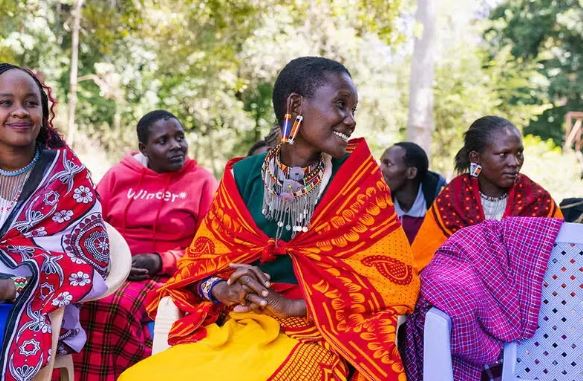
“There is no positive impact of undergoing female genital mutilation,” she says. “What girls talk about is pain, bleeding and suffering that lasts.”
Her story reflects a growing reality across Africa: education is increasingly becoming the most powerful tool for challenging harmful social norms.
A different model of manhood
What makes Ngigi’s work particularly significant is that it challenges assumptions about who should lead efforts to end practices such as FGM and child marriage.
For many years, gender equality initiatives focused largely on empowering women and girls. Increasingly, development practitioners are recognising that engaging men and boys is equally important.
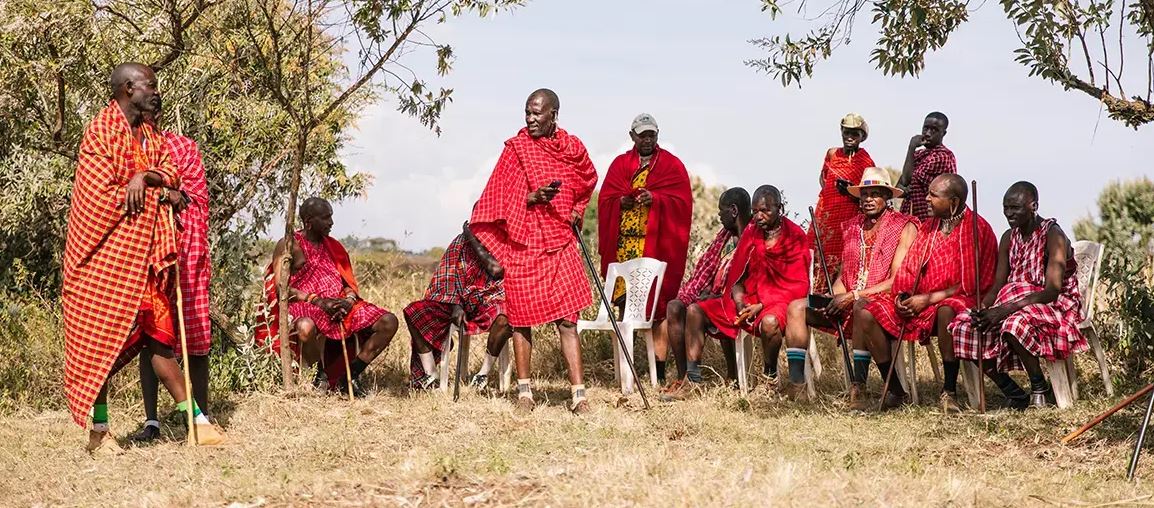
Community dialogues supported by the United Nations Population Fund (UNFPA) bring together elders, young men and community leaders to discuss the impact of harmful practices and explore alternative pathways for girls. These conversations are helping reshape attitudes towards education, marriage and gender roles.
The concept, often described as “positive masculinity”, encourages men to view leadership not through dominance or control but through responsibility, respect and support for others. Across Africa, programmes promoting positive masculinity are being used to address issues ranging from gender-based violence and HIV prevention to child marriage and girls’ education.
Education as the new rite of passage
Among the Maasai, as in many African communities, concepts of manhood have traditionally been linked to rites of passage and cultural expectations.
Increasingly, however, education is emerging as a new measure of success.
Many families that once viewed early marriage as a necessity are now seeing the economic and social benefits of keeping girls in school. Community leaders report gradual but noticeable changes in attitudes towards education and girls’ empowerment.
The transformation remains uneven and resistance persists in some communities. Yet stories like those emerging from Narok suggest that change is possible when communities themselves become part of the solution.
Beyond Kenya
The lessons extend far beyond Narok County.
Across Africa, governments, civil society organisations and development partners continue to confront the challenge of balancing respect for culture with the protection of human rights.
The experience of Patrick Ngigi and the girls whose lives have been transformed through Mission with a Vision offers an important reminder: meaningful social change rarely comes from laws alone. It happens when communities begin to redefine what leadership, responsibility and manhood mean.
For thousands of girls who have remained in school, avoided early marriage and gained control over their futures, that redefinition is already making a difference.

