

From prolonged droughts to destructive floods, climate change is increasingly shaping the lives and livelihoods of millions across Africa. At a time when countries across the continent are pushing for greater support and a stronger voice in international climate discussions, the African Group of Negotiators on Climate Change (AGN) continues to champion their interests on the global stage.
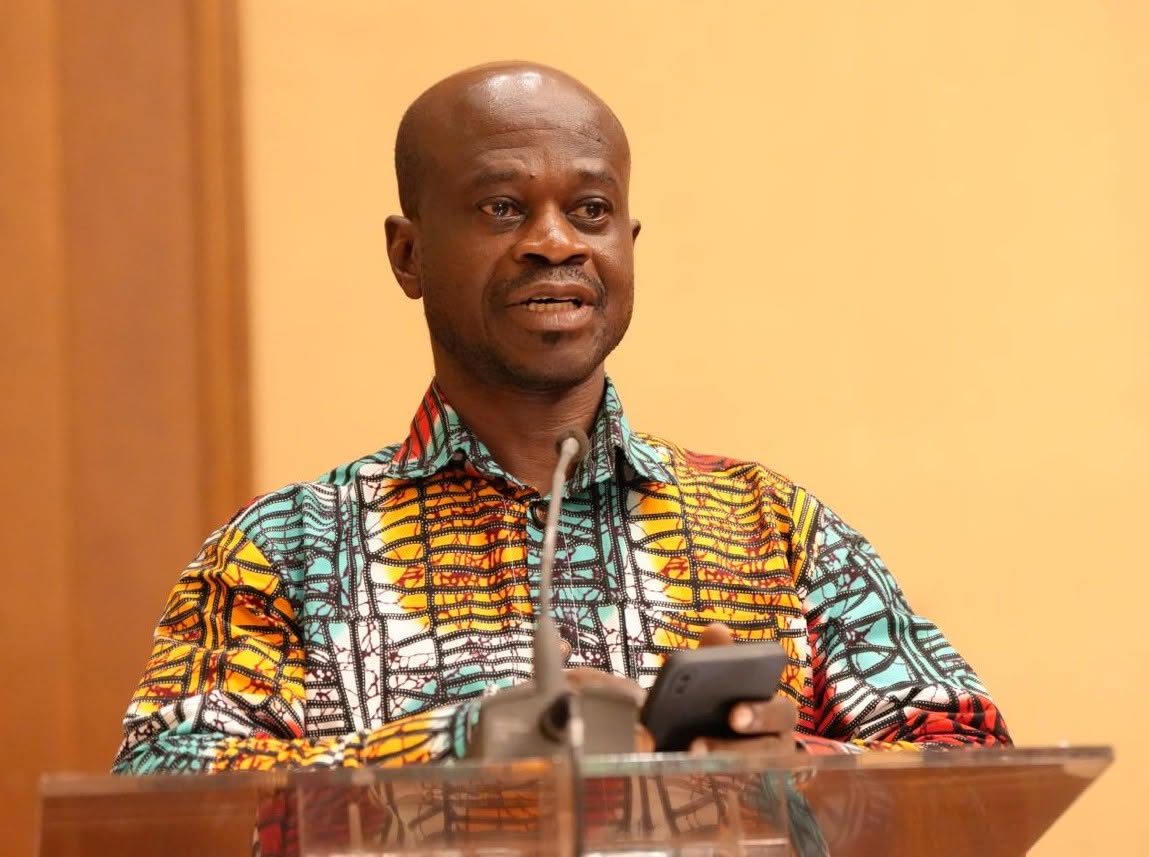
Our Writer, Wamaitha Omondi, sat down with the AGN’s current Chair, Nana Dr. Antwi Boasiako Amoah of the Republic of Ghana, to discuss climate priorities, financing needs and the road ahead in global negotiations.
Tell us a bit about the African Group of Negotiators on Climate Change (AGN).
The African Group of Negotiators on Climate Change (AGN) is a technical body within Africa’s three-tier climate negotiating structure. It engages in technical negotiations during the Conferences of the Parties (COPs) and intersessional climate change negotiations.
The AGN was established in 1995 to represent Africa’s interests in international climate negotiations with a common and unified voice.
The Group prepares and drafts negotiating texts and common positions during COPs, guided by decisions and key messages from the Committee of African Heads of State and Government on Climate Change (CAHOSCC), which is the highest decision-making tier, and the African Ministerial Conference on Environment and Natural Resources (AMCEN), the second-highest decision-making tier.
Its structure includes Lead Coordinators, Strategic Advisors, thematic coordinators, former AGN Chairs, UNFCCC focal points from the 54 African member countries, and the Secretariat.
What is climate financing, and how much reaches smallholder farmers in Africa?
Climate finance refers to money from public, private and alternative sources used to support actions that reduce emissions, help people adapt to climate impacts, or respond to climate-related losses.
According to the UNFCCC, climate finance includes adaptation finance: irrigation, drought-tolerant seeds, early warning systems, climate information, insurance, water harvesting, resilient roads and storage.
Mitigation finance: renewable energy, low-emission agriculture, agroforestry, clean cooking, methane reduction, soil carbon and biochar.
Loss and damage finance: support after climate-related disasters such as droughts, floods and crop failures.
Carbon market finance: payments linked to verified emission reductions or removals, including under Article 6 arrangements.
Globally, climate finance reached about USD 1.9 trillion in 2023, but most of it went to mitigation, especially energy and transport. Climate Policy Initiative estimates mitigation finance at about USD 1.78 trillion, while adaptation finance stood at only USD 65 billion in 2023.
For smallholder farmers, the picture is far smaller. The most detailed global estimate found that small-scale agrifood systems received only USD 5.53 billion in 2019/2020, representing just 0.8 percent of tracked global climate finance.
Sub-Saharan Africa received the largest regional share of this funding at about USD 1.86 billion, or 34 percent of the smallholder-related finance.
FAO notes that less than one percent of global climate finance reaches smallholder farmers, fisherfolk, pastoralists and forest-dependent communities, despite these groups producing a significant share of the world’s food and being among the most affected by climate change.
Much of the money passes through governments, UN agencies, multilateral development banks, climate funds, NGOs and project implementers before farmers directly benefit.
Why have African farmers historically received such a small share of climate finance?
There are several structural reasons. First, global climate finance has traditionally favoured large-scale mitigation projects such as solar farms, wind power, transmission lines and urban transport systems because they are easier to finance and generate measurable returns.
Smallholder adaptation projects involve millions of farmers, small investments, diverse crops and local climate risks that are harder to monetise.
Second, adaptation finance remains underfunded. Africa’s adaptation finance increased from USD 6.3 billion in 2017 to USD 14.8 billion in 2023, but this is still far below the continent’s estimated adaptation need of at least USD 70 billion annually.
Third, the climate finance system is highly complex and centralised. Many climate funds require accredited entities, detailed proposals, safeguards, monitoring frameworks and co-financing arrangements, which often exclude farmer groups and local organisations with limited technical capacity.
Fourth, farmers are rarely involved in setting national priorities. Nationally Determined Contributions (NDCs), National Adaptation Plans (NAPs) and donor strategies are usually developed by ministries, consultants and international partners.
Finally, smallholder agriculture is often viewed as risky because of dependence on rainfall, insecure land tenure, weak extension services, poor infrastructure and unstable markets.
What barriers prevent smallholders from accessing climate funds?
The barriers are practical, institutional and financial. Many farmers lack information about climate finance, where to apply or whether they qualify. Climate finance language is often highly technical and difficult for ordinary farmers to understand.
Institutionally, individual farmers usually cannot apply directly to major climate funds such as the Green Climate Fund (GCF), which works through accredited entities and national authorities.
Another major challenge is the lack of collateral and secure land tenure, particularly among women and youth farmers who often do not have land titles, credit histories or bankable business plans.
Climate finance also works more effectively when farmers are organised into cooperatives, producer associations or community groups. Individual farmers are costly to reach and monitor.
Funders also demand evidence on climate risks, adaptation benefits, gender impacts and emissions reductions, yet many farmer groups lack proper data systems.
In addition, international climate finance processes often involve high transaction costs, lengthy accreditation procedures and long proposal development timelines.
Are women and youth farmers benefiting equally?
No. Although women and youth are frequently mentioned in climate finance documents, they do not benefit equally in practice.
Women farmers continue to face unequal access to land, credit, extension services, markets, technology and decision-making opportunities.
According to IFAD, women in agriculture earn about 82 cents for every USD 1 earned by men and receive less than 10 percent of available agricultural credit in Africa.
Youth farmers face barriers related to access to land, finance, technology, education and business opportunities.
However, there are positive examples. FAO’s “Food Security and Agriculture: Accelerating Adaptation” (SAGA 2) project in Senegal supports women-led market gardens, access to credit, agroecology skills and women-managed climate savings funds.
Still, these initiatives remain too small compared to the scale of exclusion.
What tangible benefits can farmers expect from climate finance?
Climate finance does not always come as direct cash transfers. More often, it is delivered through services, assets, infrastructure, subsidies or concessional loans.
Farmers may benefit through climate-smart inputs such as drought-tolerant seeds and improved livestock breeds, water and irrigation support including solar pumps, drip irrigation and water harvesting systems, and insurance and safety nets such as weather-index insurance and emergency payouts.
In addition to climate information services including seasonal forecasts and early warning systems. Technology and equipment like solar dryers, cold storage and digital advisory tools. Access to concessional loans, grants, guarantees and value-chain finance. Ecosystem restoration projects such as agroforestry and soil conservation. Market access improvements through aggregation centres, storage and stronger cooperatives.
The GCF agriculture portfolio supports climate-resilient land and water management, irrigation, climate information systems, market access and weather-index insurance.
Are there proven success stories?
Yes, although they remain limited and scattered.
One example is the Acumen Resilient Agriculture Fund, anchored by the GCF, which supports agribusinesses helping smallholders adopt climate-resilient farming practices.
Another is the FAO-GCF partnership, which includes 28 investment projects worth USD 1.7 billion and reaches more than 60 million beneficiaries through sustainable land, water and forest management initiatives.
In Ghana, the GEF Small Grants Programme has announced grants of up to USD 30,000 for community groups and civil society organisations involved in sustainable agriculture, fisheries and food security projects.
The World Food Programme’s R4 Rural Resilience Initiative also helps poor farmers access crop insurance linked to savings, credit and climate-smart agriculture practices.
These examples show that climate finance works best when it combines finance with extension services, insurance, inputs, markets and climate information.
Who controls the allocation of climate funds, and how transparent is the process?
At the global level, the UNFCCC COP and the Conference of the Parties serving as the Meeting of the Parties to the Paris Agreement (CMA) set political goals and guidance.
For example, at COP29, countries agreed to a new climate finance goal of USD 300 billion annually by 2035 for developing countries, alongside efforts to mobilise USD 1.3 trillion annually from all sources.
However, the funds do not move directly to farmers. The money flows through institutions such as the Green Climate Fund (GCF), multilateral development banks, UN agencies, national ministries and accredited entities.
National Designated Authorities serve as the link between countries and climate funds by communicating national priorities and providing oversight.
Although many climate funds publish project documents and performance reports, transparency at the grassroots level remains weak. Farmers often do not know how much money has been approved, disbursed or allocated to their communities.
What reforms would ensure climate finance reaches farmers more effectively?
Several reforms are needed to ensure climate finance benefits farmers directly. African countries should ring-fence a defined share of adaptation finance for smallholder agriculture, pastoralism, fisheries and local food systems.
Countries should also establish farmer-focused climate finance windows through agricultural development banks, cooperatives and rural financial institutions.
Farmer organisations should be used as delivery channels to reduce transaction costs and strengthen bargaining power. Access procedures also need to be simplified through shorter proposal templates and standardised financing packages for community adaptation projects. Climate finance should also be bundled with extension services, insurance, training and market access to ensure sustainability.
In addition, governments and climate projects must adopt enforceable targets for women and youth beneficiaries, including collateral-free lending, youth enterprise grants and women-led financing structures.
Improved transparency is equally important. Climate-financed agricultural projects should publicly disclose approved amounts, target beneficiaries, support delivered and results achieved.
Farmer organisations also need training in proposal writing, financial management, safeguards and monitoring so they can engage directly with climate finance systems.
African negotiators should further push for climate finance reporting that clearly shows how much funding actually reaches smallholder farmers, women, youth and vulnerable communities.
In conclusion, climate finance is not charity. It is part of the global response to a crisis that African farmers contributed very little to, yet they continue to bear the greatest burden through droughts, floods, pests, crop failures and rising production costs.
African farmers can benefit from adaptation finance, climate-smart agriculture programmes, insurance schemes, carbon markets, technology transfer and national climate action plans.
However, meaningful impact will only happen if farmers are organised, represented in climate finance decision-making, included in project design and supported through practical financing systems that reach farms directly rather than remaining concentrated within ministries and institutions.

