
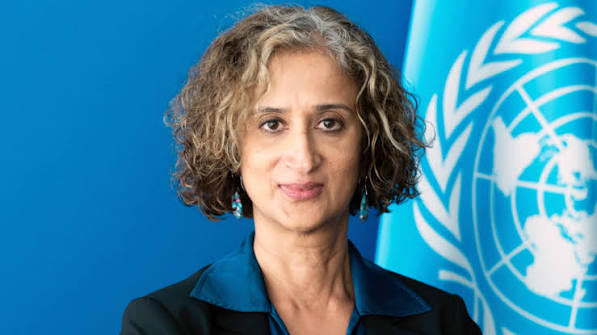
The Diplomat Couch sat down with H.E. Dr. Rosemary Kalapurakal, United Nations Resident Coordinator in Zimbabwe, to discuss the evolving partnership between the United Nations and Zimbabwe and the country’s development priorities. Drawing on the UN’s global expertise and its longstanding collaboration with Zimbabwe, she reflects on the new Zimbabwe-United Nations Sustainable Development Cooperation Framework (2027–2031), youth employment, gender equality, climate resilience, development financing and the role of the United Nations in supporting Zimbabwe’s Vision 2030. In this edited interview, she shares her perspectives on building inclusive, resilient and sustainable development for all Zimbabweans.
The Diplomat Couch is a television programme produced by The Diplomat Africa.
As you begin your tenure, how would you describe the Zimbabwe-UN partnership today, and what excites you most about the future?
Thank you so much for that question. It is an opportunity that I value greatly to be here at this time in Zimbabwe.
The United Nations, the Government of Zimbabwe and the people of Zimbabwe have had a wonderful, longstanding and trusted partnership. The United Nations is here to support countries around the world achieve their development goals.
The UN Country Team in Zimbabwe focuses on sustainable development, aligned with the country’s priorities as articulated in the National Development Strategy, Vision 2030, the African Union Agenda 2063 and the Sustainable Development Goals.
We bring expertise, experience, knowledge from across the world and operational support that can help the Government of Zimbabwe and the people of Zimbabwe achieve a more inclusive, economically stable and prosperous future.
What excites me about Zimbabwe is the opportunity. I see talent, I see youth, I see richness in resources, I see resilience and I see vision from the government.
All of this means that we are at an important point, and I am excited to be here at this moment with a new programme where we can walk hand-in-hand with this country and help Zimbabwe achieve its goals.
Looking at the history of the United Nations and Zimbabwe’s partnership, which achievements stand out as the strongest examples of what a partnership such as this can achieve?
I come here from New York with a global perspective, and what strikes me about our work and our results in Zimbabwe has been the way we have supported government priorities, especially in the social sectors.
There have been major improvements in access to healthcare, including during the COVID-19 pandemic.
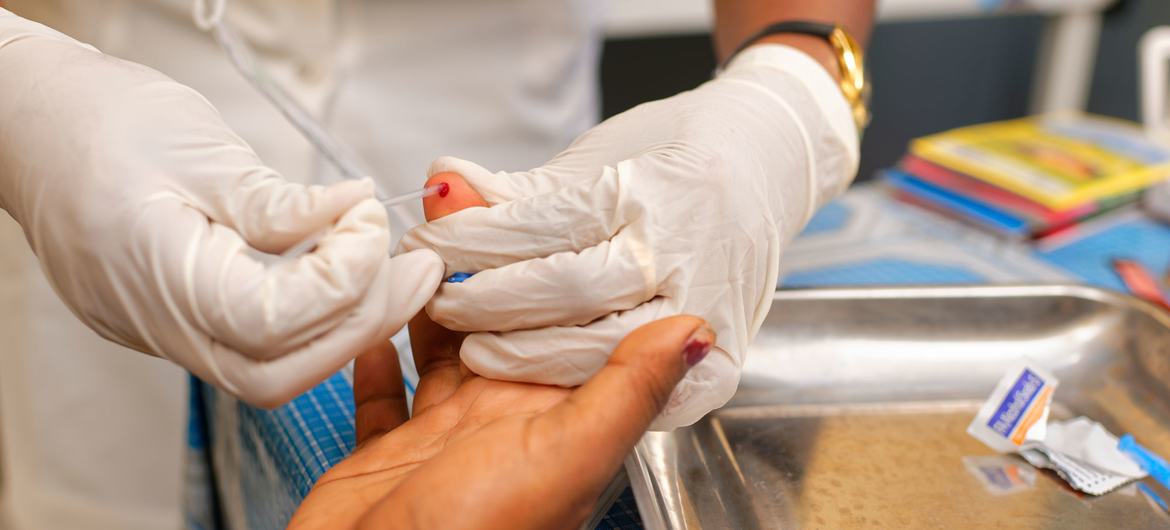
Zimbabwe has achieved its HIV 95-95-95 targets. This means that 95 percent of people living with HIV know their status, 95 percent of those diagnosed have access to care, and 95 percent of those receiving treatment achieve full viral suppression.
Similarly, in education, more children have access to safer and more inclusive schools. There has also been progress in climate-resilient agriculture and food security, including reducing food insecurity.
Those are very strong areas of achievement.
However, there are other areas where we need to continue focusing, including strengthening the connections between social, economic and environmental development.
We also need to continue building Zimbabwe’s own institutions and capacities. The results we have achieved have relied on strengthening Zimbabwe’s health systems, social protection registry and data systems. That work must continue.
You have shared some of the results of the partnership, but after your engagements with government leaders, what priorities have emerged as the most important areas of collaboration in the coming years?
The process through which the United Nations develops its programmes is based on extensive consultations with government and all parts of society.
Through those consultations, we identified five key areas in our new cooperation framework with the Government of Zimbabwe.
The first is inclusive economic growth. This focuses on issues such as formal employment, young people who are not in education, employment or training, and improving opportunities for economic participation.
It also includes supporting efforts around development financing, including the clearance of arrears.
The second area is climate resilience, energy and food security. This will be critical for Zimbabwe, including improving the renewable energy mix, strengthening climate resilience and improving food security.
The third area is investing in people. This includes health, education and other issues such as road traffic safety.
Road traffic safety is a major challenge. Five people die every day in Zimbabwe due to road accidents, which is one of the worst traffic records in the world. This is a solvable problem, but it requires a whole-of-country approach and support.
The fourth area is strengthening institutions, improving governance, building capacities and advancing rights.
The fifth area is gender equality, including promoting women in leadership, improving access to finance and entrepreneurship opportunities, reducing gender-based violence and addressing child marriage.
These are the key areas that will guide where we focus our support.
As the United Nations Resident Coordinator, you lead a UN Country Team comprising 25 UN entities. What does the One UN approach mean in practice, and how does it help deliver better development outcomes for Zimbabwe?
When people hear the term United Nations, they understand the organisation, but they may not always know the different entities within the UN, each with their own mandates, resources, governing bodies and programmes.
Each organisation does important work, but sometimes they can work separately and there may not always be enough coordination or synergies.
I have what I consider the best job in the world because I represent all of them.
My role is to bring together their expertise, knowledge and resources so that when we address an issue like inclusive economic development, it is not left to one organisation alone.
Different UN agencies have different capacities that can contribute to solving these challenges.
We also need to work with other partners, including government, the private sector and other financiers.
The One UN approach is about bringing together the strengths of the United Nations in an effective, efficient and relevant way, while telling the story of what we are doing, what we are achieving, where the challenges are and building trust.
When people turn to the United Nations, they should know that we are there and able to support them.
That is my role as United Nations Resident Coordinator, and I love it.
Zimbabwe is one of the youngest countries in the world, and you have highlighted the importance of investing in young people as drivers of inclusive economic growth. How is the United Nations supporting Zimbabwe’s efforts to create more opportunities for youth in education, entrepreneurship, innovation and employment?
Zimbabwe is one of the youngest countries in the world, and that can be a tremendous opportunity. It is what is often referred to as the youth dividend.
However, unless opportunities are created, it can also become a challenge. If you have 49 percent of youth, according to your own statistics agency, who are not in education, employment or training, that is a significant concern.
We cannot look at youth as just one sector. We have to look at all productive activities in the economy and consider how young people, especially the most vulnerable, can be included.
This means improving their skills, increasing access to formal employment opportunities, and improving access to training, resources and financing.
When we look at sectors such as agriculture and critical minerals, we have to ask: how can young people be effectively engaged? How can they become part of the solution? How can digital progress and innovation create opportunities for them?
There is so much talent in Zimbabwe, and the United Nations, through all of its programmes, will ensure that young people are systematically engaged and able to access the opportunities created through these interventions.
Women in Zimbabwe often face unique challenges when it comes to economic empowerment and accessing opportunities. What programmes is the United Nations supporting to ensure women can fully participate in Zimbabwe’s development?
It is not acceptable that women continue to face high levels of violence, that girls are married off at a young age, or that women lack access to entrepreneurship opportunities and finance.
Our interventions are designed to create opportunities and safe spaces where women can develop their potential and contribute fully to the country.
Zimbabwe has amazing women leaders, and ensuring opportunities for economic empowerment, political empowerment and freedom from violence will be a key focus for the United Nations as we work together with the government.
Zimbabwe has great potential when it comes to young people, agriculture and critical minerals that are essential for the global energy transition. How can the country leverage these resources to promote value addition, industrialisation and job creation?
Zimbabwe is a top-tier mineral-rich country, and there are many countries that have already walked this path in terms of developing their mineral resources.
There is a lot to learn from other countries about how to add value and develop the sector sustainably.
The Government of Zimbabwe has already taken steps to ensure that the country moves beyond simply exporting raw materials and focuses on beneficiation, value chains and industrial development.
The same applies to agriculture. We have to focus on developing local industries.
Young people must have opportunities to contribute productively in these sectors and benefit from them. Communities must also benefit from minerals and not become victims of irresponsible mining practices.
The role of the United Nations is to support areas such as standards, environmental and social safeguards, responsible investment and sharing experiences between countries.
We want to ensure that gains from the mineral sector translate into investments that support the country’s development.
In agriculture, it is about promoting climate-resilient agriculture and supporting the most vulnerable people working in the sector.
Financing remains critical to achieving development goals. How is the United Nations supporting Zimbabwe’s efforts to mobilise development financing, attract investment and create opportunities for sustainable economic transformation?
The traditional funding model for the United Nations has relied on donor support to undertake projects and deliver services. This has been critical to many of the results we have discussed, and we remain deeply grateful to donors for that support.
However, it is clear that the future for all developing countries lies in mobilising financing from multiple sources — domestic and international, public and private.
For us as the United Nations, we look at all the opportunities available in Zimbabwe.
There are constraints, including those related to arrears and sanctions, so supporting efforts that help the government address arrears will be important. We are engaging in policy discussions and supporting these efforts.
At the same time, we have to look at domestic resource mobilisation, including the role of the private sector.
For virtually every issue we focus on in Zimbabwe, we need to bring together what I call a “coalition of the willing”.
For example, road traffic safety is a major challenge. Where will the financing to address this come from?
It will come from government budgets through investments in infrastructure such as roads and traffic systems. It will also require support from the private sector, including insurance companies, telecommunications companies and mining companies that benefit from safer roads.
It will also involve social investment, including educating young people and road users about improving road safety.
Women entrepreneurs who gain access to safer roads and improved markets will also benefit.
We therefore need to build coalitions of investors and stakeholders around key issues, identify all possible sources of financing and create investment cases that bring everyone together.
My approach, and that of the United Nations, is to work on joint initiatives where we can build communities of partners around shared development goals.
The Zimbabwe–United Nations Sustainable Development Cooperation Framework identifies climate resilience, energy and food security as key priorities. What practical impact do you hope Zimbabweans will see from these initiatives over the next few years?
Climate resilience is going to be a challenge across the world, but it is particularly important in Zimbabwe because, as we have seen, including recently, the country has been significantly affected by the impacts of climate change.
Ensuring climate-resilient agriculture will therefore be critical. Our focus will be to work with the Government of Zimbabwe to provide coordinated action. In fact, we are already supporting the Government’s Drought Action Committee.
In addition, there is a need to strengthen early warning systems and community preparedness. We also need anticipatory action when climate impacts, such as a potential El Niño season, are expected.
Support will be needed for drought-resistant crops, livestock feed and targeted interventions for the most vulnerable communities. Current forecasts indicate that several districts in Zimbabwe are likely to be affected during the growing season, including Beitbridge, Buhera, Matobo, Mangwe, Bulilima, Chiredzi, Insiza and Mwenezi.
Our priority is to support the most vulnerable people, including smallholder farmers, pastoralists, women-headed households and children. This may include cash assistance where necessary and measures to strengthen food security.
Climate change also affects energy, making it important to invest in renewable energy and improve energy security. Food security was an area where Zimbabwe made impressive gains during the previous cooperation framework, and we will continue building on that progress.
The United Nations, through UN Women, UNICEF, UNFPA and UNDP, is working with the Ministry of Women Affairs, Community, Small and Medium Enterprises Development on the Sustaining the Gains Project, which builds on the achievements of the Spotlight Initiative. How will this programme strengthen accountability for gender equality and help sustain progress in addressing gender-based violence and advancing women’s rights in Zimbabwe?
Thank you for that important question.
The title of the programme says it all — Sustaining the Gains.
Through the Spotlight Initiative, which was funded by the European Union and implemented with the Government of Zimbabwe, significant progress was made in combating gender-based violence.
As we discussed earlier, reducing gender-based violence is a precondition for women to participate fully in every sphere of society.
To sustain those gains, there must be accountability. This joint programme builds on the achievements of the Spotlight Initiative by strengthening access to referral services for survivors of violence.
I recently visited Epworth, where district authorities, together with partners, provide psychosocial support, counselling and legal services. There is also a safe, clean and hygienic marketplace where women traders can conduct business while knowing their children are protected through on-site childcare services.
Many cases of abuse occur when women are away from home earning a living, leaving children vulnerable. By creating safe spaces and integrated support services, we can better protect both women and children.
This programme brings together the expertise of UN Women, UNICEF, UNFPA and UNDP under the leadership of the Government of Zimbabwe. It strengthens systems at both national and local levels and promotes accountability by ensuring institutions work together to provide quality services and support.
Achieving these gains is not a short-term intervention. That is why I appreciate this programmatic approach. It builds on the achievements of the Spotlight Initiative while remaining committed to sustaining those gains over the long term.
Zimbabwe was recently elected as a non-permanent member of the United Nations Security Council for the 2027–2028 term. From your perspective, what opportunities does this present for Zimbabwe and for amplifying African voices on the global stage?
It is a significant achievement.
There are only ten non-permanent members of the Security Council, and three represent Africa. Zimbabwe’s election with 182 votes is a major diplomatic accomplishment.
This presents an important opportunity for African voices to be heard at a time when the world is facing numerous peace and security challenges.
Zimbabwe will be able to contribute not only its own national perspective but also represent broader African interests in shaping discussions and decisions within the Security Council.
It is also an opportunity to build on Zimbabwe’s growing leadership within Southern Africa and across the continent by contributing to global peace and security discussions.
As United Nations Resident Coordinator, you oversee 25 UN entities in Zimbabwe. Looking ahead, as Zimbabwe prepares to implement the 2027–2031 Zimbabwe–United Nations Sustainable Development Cooperation Framework and continues its journey towards Vision 2030, what would you like Zimbabweans to know about the United Nations’ priorities and the role you hope the organisation will play in supporting the country’s development aspirations?
The future of Zimbabwe will be built by Zimbabweans.
The country’s future lies in the hands of its people, its talent and its abundant resources.
I see tremendous opportunity. I see Zimbabwe at an important turning point. The country has a new vision, a new National Development Strategy 2 and many opportunities ahead.
One word that captures my feelings is mukana—opportunity.
Zimbabwe has a unique window of opportunity before it.
The United Nations will continue to be a trusted partner, walking alongside Zimbabwe, supporting national priorities and helping to nurture the country’s talent.
From the day I arrived, I have felt that Zimbabwe is on the cusp of something significant.
It is now up to all of us to bring together our resources, expertise and ambitions so that Zimbabwe can realise the aspirations set out in Vision 2030.