

As climate pressures mount, growing numbers of smallholder farmers are turning to Sahiwal cattle to boost milk production, reduce risks and build more resilient farming businesses.
By Wamaitha Omondi
For years, dairy farmers in Kenya’s dry and semi-arid regions faced a difficult dilemma.
They could keep indigenous cattle that were well adapted to local conditions but produced relatively little milk, or invest in high-yielding exotic breeds that often struggled with heat, disease and rising feed costs.
Today, a growing number are choosing a different path.
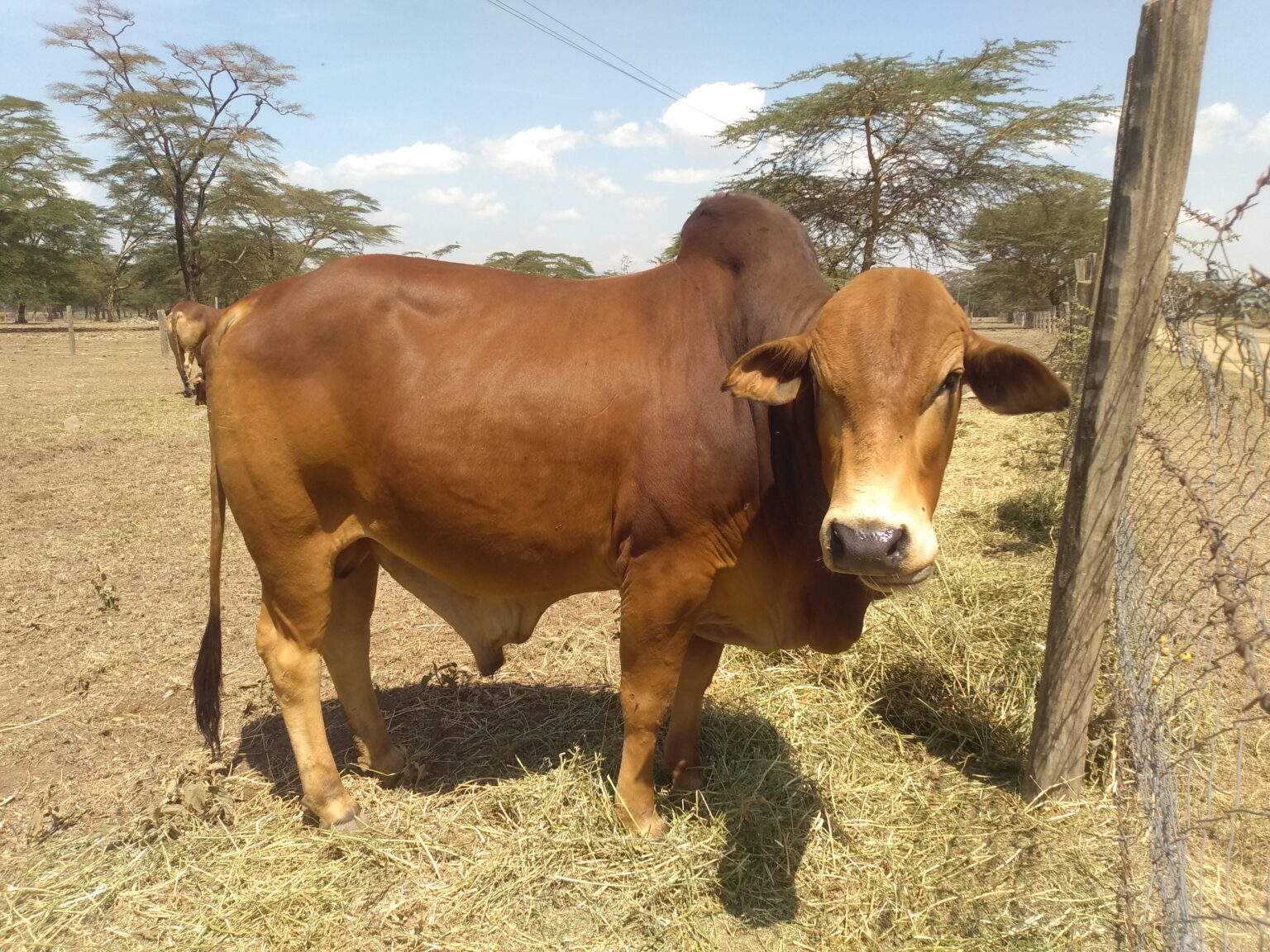
Across counties such as Narok, Nakuru and Nyandarua, smallholder farmers are increasingly embracing Sahiwal cattle and Sahiwal crossbreeds, attracted by a combination that has become increasingly important in a changing climate: resilience and productivity. The breed is helping farmers increase milk production, lower veterinary costs and build more sustainable farming enterprises.
The Sahiwal, long recognised for its tolerance to heat, resistance to disease and ability to perform under low-input conditions, is steadily gaining popularity among farmers seeking to improve productivity without significantly increasing costs.
In Nyandarua County, Joseph Karanja says introducing Sahiwal genetics transformed his dairy operation.
“I used to keep indigenous breeds that gave me two to three litres a day, but with the Sahiwal crosses I now get between 10 and 15 litres, even during dry periods,” he said.
The increased production has translated into higher household income, while the breed’s resilience has reduced expenditure on veterinary treatments.
“Before, I was constantly calling the veterinary officer because the cows would easily fall sick, especially during cold seasons. But these crosses are stronger and easier to manage. Even feeding costs are lower because they can survive on locally available fodder,” Karanja said.
The improvements have allowed him to sell milk regularly through a collection centre, helping him pay school fees and improve his family’s living standards.
The changes have also sparked interest among younger family members.
“My son used to think dairy farming was a waste of time because we were not making profits. But after seeing the changes, he now helps me with feeding and record keeping because he sees there is money in it,” he said.
Similar experiences are emerging elsewhere.
In Ndabibi, Naivasha, farmer Martin Mahinda says a Friesian-Sahiwal cross helped nearly double his milk production while improving the herd’s ability to cope with prolonged dry spells.
“I learnt about the Sahiwal breed during a farmers’ forum two years ago and decided to try a crossbreed since they do well in this area. It’s a decision I have not regretted,” he said.
Mahinda has expanded his herd from four to eight cows and increased daily milk sales to about 40 litres, which he supplies to a local dairy cooperative.
“In Naivasha we experience long dry spells and many farmers struggle because some breeds require a lot of water and expensive feeds. But the Sahiwal crosses are more adaptable and continue producing milk even when conditions are tough,” he said.
For farmers in drought-prone areas, that adaptability is becoming a critical advantage.
In Narok County, Jane Naserian says she adopted Sahiwal crosses after repeated droughts exposed the limitations of her traditional herd.
“I used to keep local breeds because they survive drought better, but milk production was very low. When I introduced Sahiwal crosses, I started getting more milk while still keeping animals that can survive our environment,” she said.
Her cows now produce between 12 and 16 litres of milk per day compared to about four litres previously.
The additional income has enabled her to invest in livestock housing, purchase hay during dry seasons and support her children’s education.
“Before, whenever drought became severe, we were forced to sell animals at throwaway prices to survive. But now milk gives us daily income and we can plan better as a family,” she said.
The growing demand for the breed reflects a wider shift taking place within Kenya’s livestock sector.
Scientists at the Kenya Agricultural and Livestock Research Organization (KALRO) say farmers are increasingly seeking breeds capable of maintaining productivity under rising temperatures, changing rainfall patterns and mounting feed challenges.
Dr Samuel Mbuku, Director of the KALRO Dairy Research Institute in Naivasha, says Kenya is increasingly becoming a regional source of climate-smart livestock genetics.
Demand for Sahiwal breeding stock and semen is rising not only within Kenya but also in countries including Uganda, Tanzania, Rwanda, Nigeria and Senegal.
“Over the past few years, we have seen a steady increase in requests for Sahiwal semen and live animals from across the region. This is because farmers are looking for animals that can produce reasonably well under changing climatic conditions,” Mbuku said.
According to KALRO, pure Sahiwal cattle can produce between eight and 15 litres of milk per day under smallholder conditions, while Friesian-Sahiwal crosses can reach up to 20 litres at peak production. Jersey-Sahiwal crosses average about 14 litres and are valued for improved fertility and shorter calving intervals.
Researchers attribute the breed’s success not only to milk yields but also to its efficiency.
Feed costs account for nearly 70 per cent of dairy production expenses in Kenya, making animals that can thrive on locally available fodder particularly attractive to smallholder farmers.
To address this challenge, KALRO has developed climate-smart forage varieties, including improved Napier grasses, lucerne and banana grass, designed to improve feed availability while lowering production costs.
“These forages can significantly reduce reliance on expensive commercial feeds. When farmers combine the right breed with proper feeding and health management, the gains are substantial,” Mbuku said.
The opportunity is significant.
According to the Kenya Dairy Board, Kenya has approximately 5.3 million dairy cattle producing about 5.3 billion litres of milk annually. Yet productivity per animal remains below global averages, highlighting the potential gains that can be achieved through improved genetics and better management practices.
Experts caution, however, that genetics alone will not transform the sector.
Challenges including high feed costs, recurring droughts, limited artificial insemination services and inadequate investment in research continue to constrain livestock production. Scientists also warn against indiscriminate crossbreeding, which could gradually dilute the very traits that make Sahiwal cattle valuable, including heat tolerance, disease resistance and feed efficiency.
To safeguard those advantages, researchers advocate structured breeding programmes that maintain pure Sahiwal lines while producing carefully managed crossbreeds suited to local conditions.
The lessons extend beyond Kenya.
As African countries search for ways to strengthen food security and build climate resilience, the experience of Sahiwal farmers demonstrates that productivity and adaptation can go hand in hand.
For thousands of smallholder farmers, the breed is proving that climate-smart agriculture is not simply about surviving harsher conditions. It is about creating new opportunities for growth, improving household incomes and building more resilient rural economies.