

From weekly neighbourhood clean-ups to daily acts of civic responsibility, Rwanda’s environmental success is sustained not only by policy but by the collective efforts of ordinary citizens.
INEZA LEONTINE
At 7:00 a.m. in Musanze District, northern Rwanda, the day begins with the rhythmic sound of brooms sweeping across the ground.
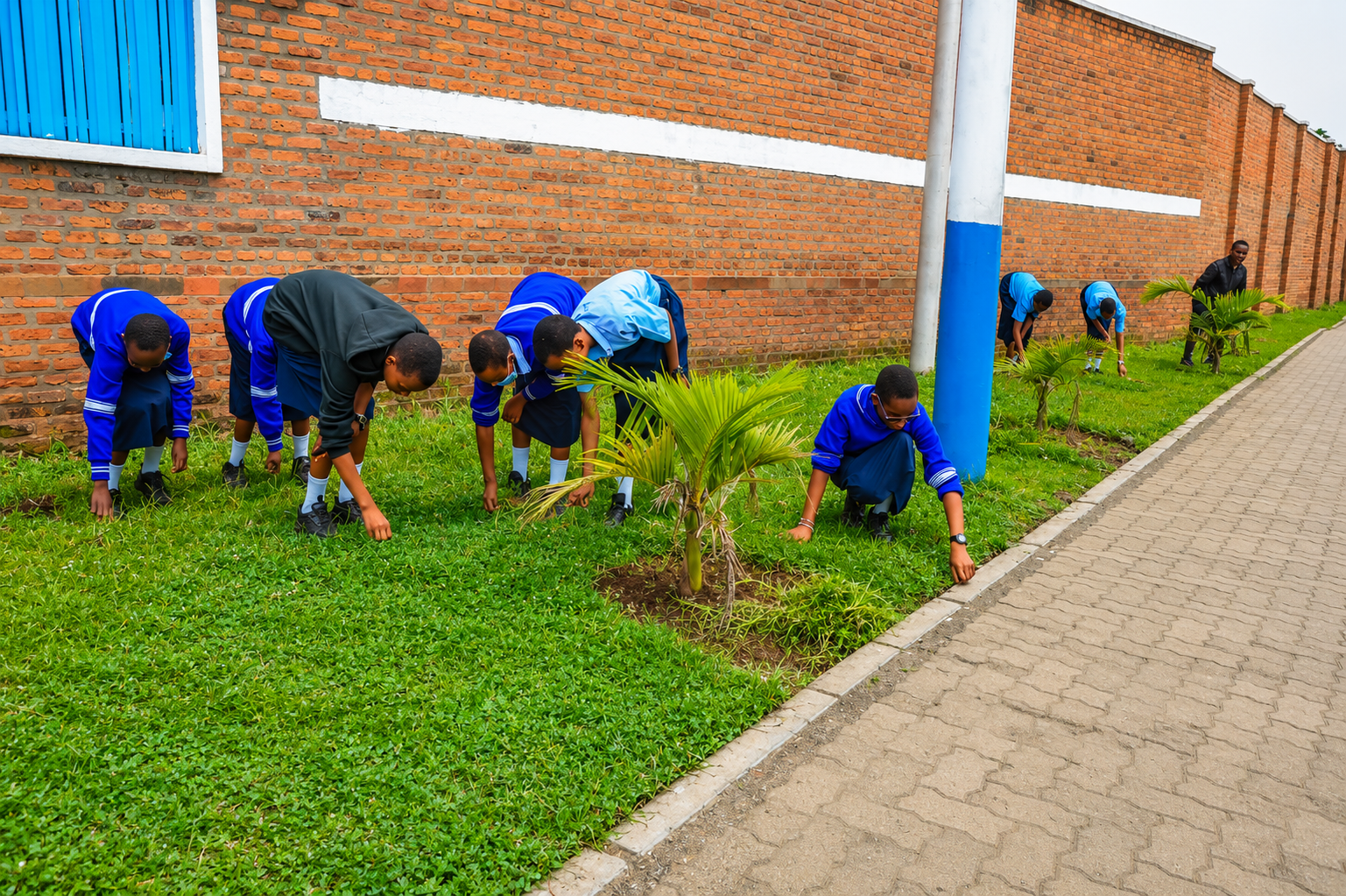
In school compounds, students clear courtyards before classes begin. Along nearby roads, residents trim grass, collect waste and clean drainage channels. In trading centres, shop owners pause before opening their businesses to tidy the spaces in front of them.
By 9:00 a.m., the activity ends. But in those early hours, a powerful idea comes to life: keeping communities clean is everyone’s responsibility.
The scene is part of Igitondo cy’Isuku — “Cleanliness Morning” — a local initiative that has become a regular feature of community life in Musanze. While Rwanda is widely known for Umuganda, the monthly national community service programme that brings citizens together to clean neighbourhoods and undertake development projects, initiatives such as Igitondo cy’Isuku demonstrate that the country’s environmental achievements are sustained through much more than a once-a-month exercise.
 Across Rwanda, local authorities, institutions and communities have developed complementary programmes that reinforce the spirit of collective responsibility throughout the year. In Musanze, a district renowned for tourism and as a gateway to Volcanoes National Park, cleanliness has become part of the weekly routine.
Participation cuts across age, profession and social status.
Students, traders, civil servants and residents work side by side, transforming what could be viewed as an obligation into a shared community habit.
Among them is Hagenimana Illumine, who joins the activity every Tuesday morning.
“This programme has changed my mindset. Wherever I am, I feel responsible for maintaining cleanliness,” she says.
For many residents, the impact extends beyond public spaces.
Nyiranzabanita Immacule says the initiative has influenced attitudes within households and communities alike.
“Before, you could find people throwing waste anywhere. That is no longer common,” she explains.
“Even at home, cleanliness has improved because of the advice we receive from local leaders after these activities.”
That shift in behaviour is one of the less visible but more significant outcomes of Rwanda’s environmental efforts. Clean streets are easy to notice. Changes in attitudes and habits are harder to measure, yet they often determine whether progress lasts.
For business owners, cleanliness has also become an economic consideration.
“We clean around our shops every morning because customers notice the environment,” says Mizero Emmanuel, a trader in Musanze District.
“It is not just about following rules, it is about attracting people.”
The connection between environmental management and economic activity is particularly important in a district that relies heavily on tourism. Clean public spaces contribute to the image of the area and influence visitors’ experiences.
Behind the visible results are workers whose daily efforts help sustain the system.
Mukasekuru Vestine, a waste collector in Musanze, says significant progress has been made in waste management and public awareness, although challenges remain.
“People are improving in how they handle waste, especially with sorting,” she says.
“But sometimes waste is still mixed, which makes our work harder.”
Her experience reflects a broader reality facing many countries. Maintaining clean communities requires not only public participation but also effective waste collection, sorting and disposal systems.
Local leaders continue to play an active role in reinforcing that culture.
In Musanze, district officials regularly participate in clean-up activities alongside residents, helping to promote both environmental awareness and civic engagement.
Kayiranga Theobald, the district’s Vice Mayor for Social Affairs, says the initiative has become an important tool for strengthening environmental stewardship.
“We appreciate the participation of citizens in this programme, which takes place every Tuesday from 7:00 to 9:00 a.m.,” he says.
“It is helping to improve the image of Musanze as a tourism city while also raising awareness about cleanliness among residents.”
Locally, the initiative is known as Isaha imwe y’Umuganda, Nsukura Musanze yanjye — one hour of community work dedicated to keeping the district clean.
Yet sustaining such efforts requires consistency.
For many residents, participation means adjusting work schedules, school commitments and family responsibilities. Maintaining momentum depends on continued community buy-in and strong local leadership.
At the same time, broader challenges remain within Rwanda’s waste management sector. While the country has made considerable progress in promoting cleanliness and organising waste collection systems, gaps in recycling infrastructure, waste sorting and long-term disposal solutions continue to present challenges.
These are issues facing many rapidly urbanising societies.
By mid-morning, Musanze returns to its usual rhythm. Shops open, students head to class and traffic builds along the roads.
But the results of those early hours remain visible in cleaner streets, organised public spaces and a stronger sense of collective ownership.
Over time, these repeated routines — whether through Umuganda or community initiatives such as Igitondo cy’Isuku — have contributed to something larger than environmental management.
They have helped nurture a culture in which cleanliness is increasingly viewed not as an occasional civic duty but as part of everyday life.
That may be Rwanda’s most enduring environmental achievement.
Policies can establish direction and institutions can provide support. But lasting change often depends on what happens at community level, where citizens translate national ambitions into daily practice.
In Musanze and across Rwanda, clean streets are not simply the result of regulation. They are the product of thousands of ordinary actions repeated week after week, year after year, by people who see the spaces they share as a collective responsibility.