

TAURAI MHAKA
A decade ago, the world rallied behind an ambitious promise: end extreme poverty, reduce inequality and build a more sustainable future by 2030.
Today, that promise is under unprecedented strain.
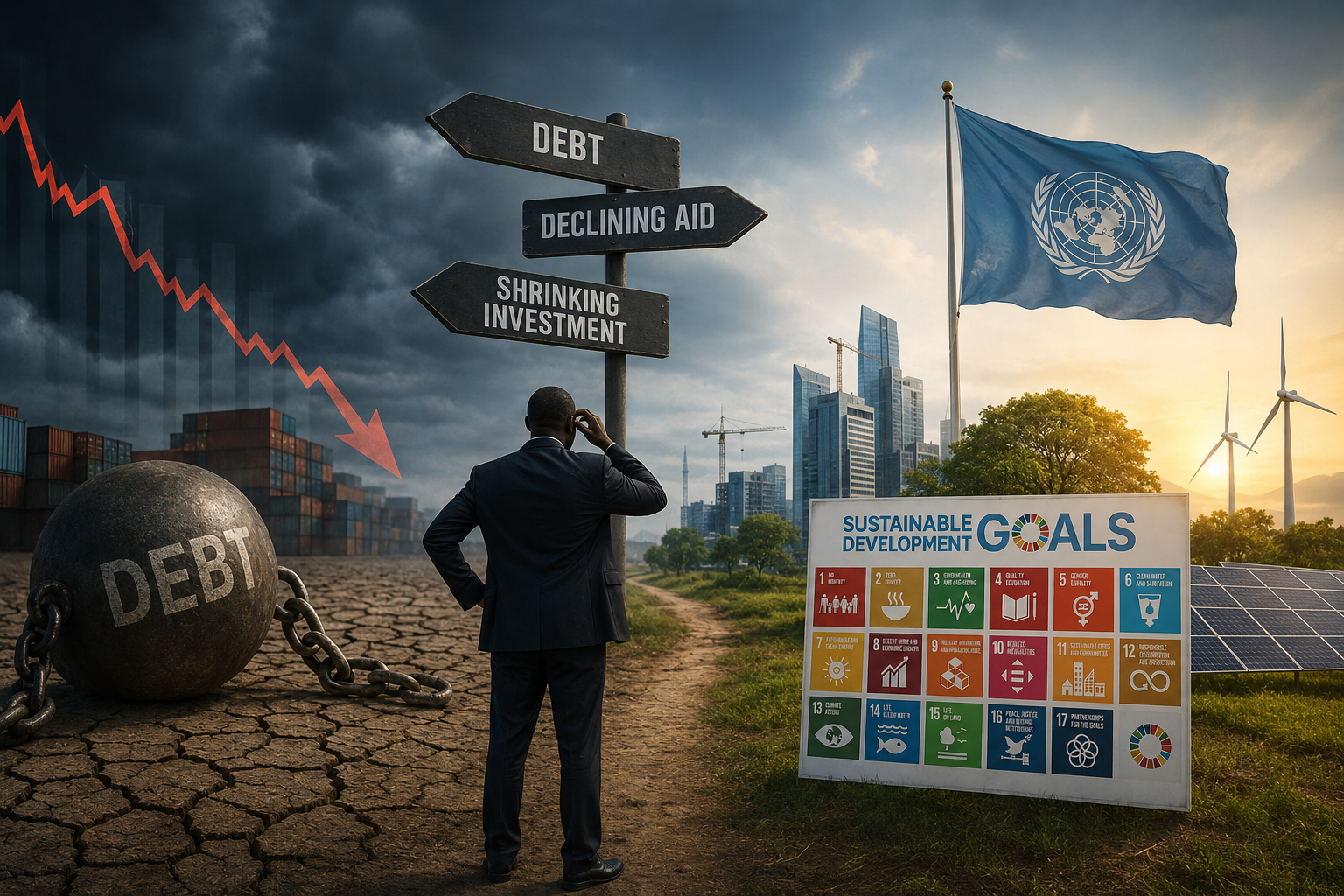
According to the United Nations’ Financing for Sustainable Development Report 2026, developing countries are facing a growing financing crisis at precisely the moment they need investment most. The report estimates that the annual financing gap to achieve the Sustainable Development Goals (SDGs) has now exceeded US$4 trillion, a figure that continues to widen as governments grapple with debt burdens, declining aid flows and an increasingly uncertain global economy.
“The needs are urgent,” United Nations Secretary-General António Guterres writes in the report’s foreword. “Developing countries face shrinking fiscal space, high borrowing costs, declining aid flows, volatile trade and uneven access to technologies and innovation.”
For Africa, the warning is particularly significant.
Many countries entered the decade hoping to accelerate industrialisation, expand infrastructure and create jobs for rapidly growing populations. Instead, many now find themselves balancing competing pressures: servicing debt, responding to climate shocks and financing basic public services with increasingly limited resources.
The report describes this as a “financing squeeze” affecting many of the world’s poorest and most vulnerable countries. While global financial markets appeared relatively stable in 2025, developing countries continued to face high borrowing costs and mounting debt-servicing obligations. In 14 developing countries, external debt service now consumes more than 20 percent of government revenue, crowding out spending on health, education and infrastructure.
At the same time, one of the most important sources of development finance is shrinking.
Official Development Assistance fell by six percent in 2024 to US$214.6 billion and is projected to decline by a further 10 to 18 percent in 2025. Least Developed Countries, many of them in Africa, are expected to be among the hardest hit. The report warns that bilateral aid to these countries could fall by as much as 25 percent, threatening programmes that support health, education, food security and economic development.
Foreign investment, another critical source of capital, is also moving in the wrong direction.
The report notes that foreign direct investment into developing economies continues to decline. Excluding volatile financial flows, global FDI fell by 11 percent in 2024 to US$1.49 trillion, marking the second consecutive year of contraction. International project finance, often used to support large infrastructure and energy projects, has fallen by 40 percent since 2021.
Yet perhaps the report’s most sobering message concerns the changing nature of global cooperation itself.
The authors argue that the world is becoming increasingly fragmented. Trade, investment and financial flows are being reshaped by geopolitical competition rather than purely economic considerations. Investment relationships are shifting, supply chains are being reorganised and multilateral institutions are struggling to respond to a rapidly changing global landscape.
“Trade, investment and capital flows are being reconfigured and are fragmenting along geopolitical lines,” the report warns, arguing that such fragmentation could undermine financing and development prospects for many countries.
For Africa, this presents both risks and opportunities.
A more fragmented global economy could make it harder for countries to attract investment and secure affordable financing. At the same time, it could accelerate efforts to strengthen regional value chains, boost intra-African trade and deepen economic integration through the African Continental Free Trade Area.
The report points to the recently adopted Sevilla Commitment as a potential roadmap for reversing current trends. Agreed by UN member states in 2025, the framework seeks to mobilise investment, address debt vulnerabilities and reform elements of the international financial architecture. More than 130 implementation initiatives have already been launched under what is known as the Sevilla Platform for Action.
But the report is clear that success will depend on more than new commitments.
“Financing for development is more than an economic imperative,” Guterres writes. “It represents a pathway to a future in which all countries can thrive, trade and prosper together.”