

Young people are increasingly taking part in conversations on diplomacy, governance and international affairs. Through regional and international platforms, they are finding opportunities to represent Zimbabwe, contribute to policy discussions and raise issues affecting their generation.
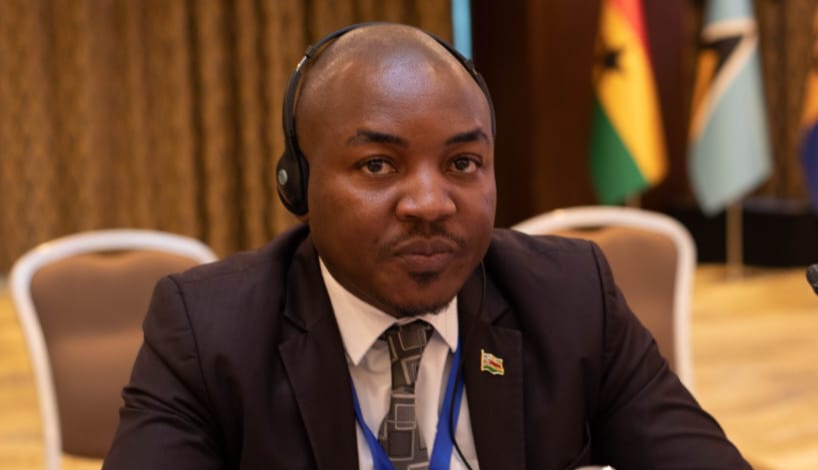
Abiel Mawere, founder and executive director of Zimbabwe Young Ambassadors and Zimbabwe’s national chapter representative to the Non-Aligned Movement Youth Organization, has built his work around youth diplomacy and international relations. In this interview, he discusses the importance of youth participation in international affairs, the role of young people in governance and the opportunities available to those seeking careers in diplomacy.
The Diplomat Couch is a television programme produced by The Diplomat Africa.
What first drew you to international relations and youth diplomacy?
My journey dates back to my high school years, when I participated in the Junior Council and Junior Parliament programmes run through the Zimbabwe Youth Council. These programmes identify young people who are interested in the affairs of the country.
My involvement continued through university and eventually developed into full-time work in youth diplomacy. The journey has been driven by my passion for Zimbabwe and my desire to see the country represented equally and confidently across the world.
Diplomacy is something we practise in our everyday lives, but at the international level, it involves negotiation and the resolution of conflict without the use of force. Zimbabwe has a strong diplomatic tradition, and the growing engagement we are witnessing creates opportunities for young people to contribute to international affairs.
What gap did you identify among young Zimbabweans that led you to establish Zimbabwe Young Ambassadors?
Zimbabwe Young Ambassadors began in 2009 and was officially registered with the Zimbabwe Youth Council as a district association in 2014. It later became a provincial association before attaining national association status in 2019.
The organisation was inspired by the need to help young people understand the responsibility they carry when representing Zimbabwe, whether at home or abroad.
A young person studying in India, Russia or any other country also represents Zimbabwe through their conduct and the way they interact with others. Representation is not limited to politics or holding an official position. People form impressions of our country through our actions.
We identified the need to remind young people of their values and the importance of Ubuntu. We emphasise three values: discipline, hard work and patriotism. These are important qualities for young Zimbabweans wherever they are in the world.
We want young people to love their country, conduct themselves responsibly and work hard to contribute to its development. This remains part of our work as an organisation.
You also serve as Zimbabwe’s national chapter representative to the Non-Aligned Movement Youth Organization. What does this role involve, and why is youth representation important within the movement?
The Non-Aligned Movement brings together countries that share a commitment to principles including peaceful coexistence and respect for the sovereignty of other nations. Zimbabwe is a member of the movement, which provides a platform for engagement among its member states.
The youth organisation emerged from efforts by young people to establish a stronger presence within the movement. Discussions began around 2020 and 2021, followed by a gathering in Azerbaijan in July 2022 that contributed to the organisation’s establishment.
One of the movement’s important objectives is to promote peace, coexistence and tolerance among member states. There are armed conflicts taking place around the world, and young people are among those affected.
As young people, we have a responsibility to promote peaceful coexistence and encourage the resolution of disputes without force. We believe young people have a voice in global politics and should be involved in advancing these principles.
How can young people move beyond simply participating in international forums to influencing decision-making?
It begins with mindset. Young people need to develop a mindset that embraces progress and change. However, they must also understand the procedures and protocols that guide decision-making.
There are platforms at national, regional and international levels where young people can present their views. The important thing is to understand how these platforms operate, follow the law and research the processes involved in influencing policy.
In Zimbabwe, for example, young people have opportunities to present their concerns and proposals through Parliament. These concerns can be considered through the appropriate parliamentary processes.
There are also opportunities through the Pan-African Parliament, the African Union and the United Nations Youth Office. Young people need to familiarise themselves with these institutions and understand how to engage with them effectively.
You participated as a special delegate at the Fifth Symposium of the African Peer Review Mechanism Youth Division. What were the key issues emerging from that platform?
The symposium, held at the Pan-African Parliament, provided an opportunity for young people to discuss issues affecting them across the continent, including governance, financial challenges and development.
One of the key messages was that young people are increasingly taking up space in governance. We should not see ourselves only as leaders of tomorrow; we are leaders of today. At the same time, we can learn from older generations and draw on their experience.
Another important issue was the need to prioritise youth innovation across Africa. Young people are embracing digital technology, and there are opportunities to use it to support development and strengthen regional cooperation.
The discussions also touched on the African Union’s Agenda 2063, which sets out the vision of The Africa We Want. We want an Africa where young people are involved in decision-making and where countries work towards greater integration.
Africa has significant natural resources, but these resources should also contribute to the continent’s own development. We want Africa to move beyond simply supplying resources to the rest of the world and become a stronger participant in global decision-making.
As an active member of YOUNGO, the official children and youth constituency to the United Nations Framework Convention on Climate Change, how are young people contributing to global climate discussions?
Climate change is a collective concern, and everyone should be interested in understanding how it affects the world. Through YOUNGO, young people identify gaps in climate action and share ideas on how these challenges can be addressed.
As preparations for COP31 in Türkiye continue, one important area of focus is the commitments made at previous climate conferences and the extent to which they are being implemented.
Young people have discussed issues such as climate finance, adaptation and mitigation. These conversations must go beyond the classroom. We need practical solutions that respond to the effects of climate change and help communities adapt to changing weather patterns.
YOUNGO also provides a platform for young people from different countries to exchange knowledge and experiences. Countries have different climate policies and frameworks, and these exchanges allow young people to learn from one another and propose solutions that support their respective national priorities.
You have also led the Diplomatic Youth Leadership Programme in tertiary institutions in Zimbabwe and the wider Southern African region. What have your interactions with students revealed about their understanding of diplomacy?
This has been one of the most interesting roles I have undertaken. Students are often very alert because they study and conduct research, so interacting with them has been an opportunity to exchange ideas and learn from one another.
The programme was introduced in 2014 to promote values such as patriotism, discipline and hard work. We recognised that university students also represent their institutions through their conduct and interactions with others.
The programme is open to students from different academic backgrounds, whether they are studying medicine, the arts, politics or public management. The values associated with diplomatic leadership are important regardless of one’s profession.
You cannot be an effective professional without discipline and a sense of responsibility. We therefore want to help students understand how these values apply in their studies, careers and interactions with the wider world.
We have worked with institutions in Zimbabwe and across the Southern African Development Community region, and our aim is to extend the programme to other parts of Africa and eventually beyond the continent.
Young Zimbabweans face challenges such as unemployment, climate change, limited educational opportunities and access to funding. How can youth representatives ensure these concerns are included in regional and international policy discussions?
Young people first need to understand the structures and institutions that serve them in their own countries. In Zimbabwe, they should familiarise themselves with the Zimbabwe Youth Council, the national youth policy and the work of the Ministry responsible for youth affairs.
It is important to read these documents, understand the rights of young people and learn about the programmes available to them. Young people should also pay attention to news and information about opportunities that may benefit them.
Another important platform is Parliament. When opportunities arise for young people to engage with parliamentary processes, they should participate and submit their proposals through the appropriate channels.
At regional and continental levels, young people can also engage through platforms within SADC and the African Union, as well as relevant United Nations initiatives.
There are many ways to influence policy, but young people need to be informed and prepared. If we bring practical and sustainable solutions to the table, we can contribute meaningfully to improving people’s lives.
For young Zimbabweans and Africans interested in diplomacy and international relations but who may not have access to established networks, how can they begin building a career in the field?
The first step is research. We are living in a fast-paced digital era where social media plays a major role, but young people must learn to distinguish reliable information from misleading content.
I encourage them to visit the official websites of organisations that offer opportunities. Youth organisations and international institutions regularly publish information about programmes, volunteering and other ways to participate.
There are opportunities through organisations such as the African Union and the United Nations, including volunteer programmes. These can help young people gain experience, understand how international institutions work and build networks.
There are also research opportunities through organisations such as ours, which can support young people interested in developing their knowledge and contributing ideas.
Young people should not assume that opportunities are inaccessible simply because they do not already know people in the field. They need to research, apply, volunteer and take advantage of legitimate opportunities when they arise.
What final message would you like to share with young people who want to make a difference?
My message is that opportunities exist, but where you feel opportunities are lacking, create them for yourself.
The three pillars I emphasise are patriotism, discipline and the determination to wake up and create opportunities. It is our mindset that needs to change if we want to achieve the things we aspire to.
If you have a dream, wake up and work towards achieving it. The sky is the limit.