


REJOICE EMMANUEL
The growing momentum behind the African Continental Free Trade Area (AfCFTA) is creating new opportunities for businesses seeking access to larger regional markets. Unlocking those opportunities, however, will require deliberate efforts to ensure that women and young entrepreneurs are equipped to participate and compete.
A new assessment in Zambia has identified both the strengths and gaps within the country’s entrepreneurial ecosystem, providing a roadmap for increasing the participation of women and youth-led enterprises in regional trade.
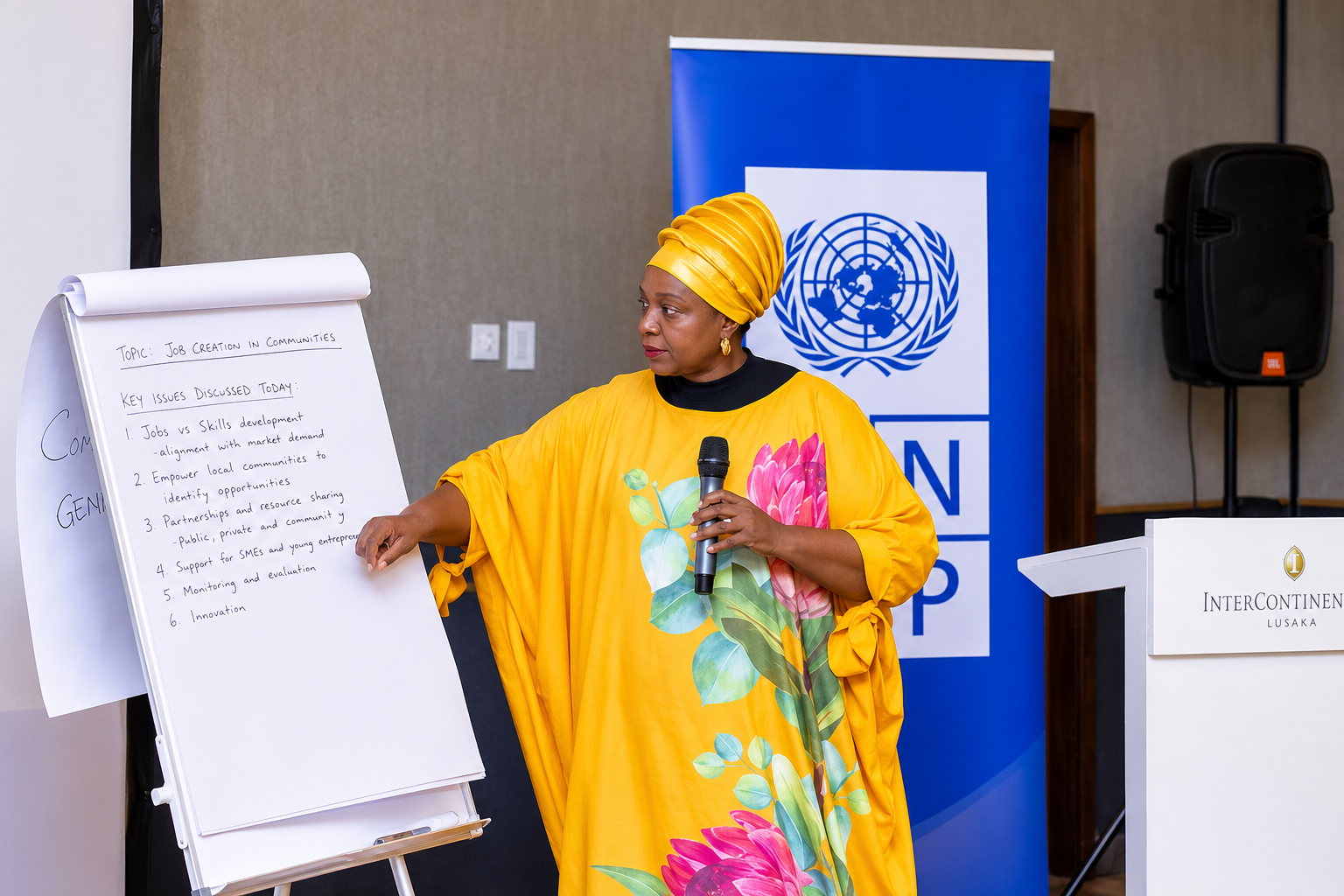
Speaking during the validation of the Zambia Country Scan under the Enhancing Capacities of Women and Youth-Led Enterprises for Regional Trade (ECoWYERT) project in Lusaka, United Nations Development Programme (UNDP) Resident Representative James Wakiaga said the initiative seeks to position women and young people at the centre of regional economic growth.
“ECoWYERT is not simply a business support project; it is an investment in the future of Africa’s young women and youth. By combining capacity building, access to finance and ecosystem strengthening, we aim to unlock their potential to participate meaningfully in regional trade, create jobs and contribute to inclusive and sustainable economic growth,” he said.
Implemented by UNDP in partnership with the Mastercard Foundation, ECoWYERT is a five-year regional initiative running from 2025 to 2030 in Botswana, the Democratic Republic of Congo, Malawi, South Africa, Zambia and Zimbabwe.
The country scan found a vibrant but largely informal enterprise sector, with women leading 85 percent of surveyed businesses and 71 percent operating in peri-urban areas. While many enterprises are already involved in cross-border trade, they continue to face barriers including limited access to finance, weak business support systems, digital exclusion and low awareness of AfCFTA opportunities.
The assessment also found that many businesses remain concentrated in low-value trading activities and struggle to transition into higher-value regional value chains. Clothing and textiles, agricultural and food products, agro-processing and light manufacturing were identified as sectors with strong growth potential.
Director for Small and Medium Enterprise Development at Zambia’s Ministry of Small and Medium Enterprise Development, Pamela Chitulangoma said the findings provide an important foundation for future interventions.
“The Country Scan we are validating today gives us evidence on the institutional, policy and service constraints that affect how young entrepreneurs engage in intra-African trade. Validation is important because it ensures that what we take forward is grounded in reality, shaped by those who live it and aligned with what our market can sustain,” she said.
Officially opening the workshop, Permanent Secretary in the Ministry of Commerce, Trade and Industry Lillian Bwalya described AfCFTA as a major opportunity for economic transformation.
“The African Continental Free Trade Area presents the biggest market platform with a GDP estimated at US$3 trillion and a population of 1.4 billion, creating opportunities for investment and trade growth. However, realising these benefits requires deliberate efforts and tailored interventions to ensure that women and youth-led enterprises are not left behind,” she said.
The assessment identified the Kasumbalesa, Chirundu and Kazungula trade corridors as priority areas for intervention and will guide future ECoWYERT programmes, including entrepreneurship training, access to finance, digital inclusion and market linkage support. The initiative is expected to reach 28,300 participants across the six countries, with at least 70 percent of beneficiaries being young women, while contributing to the creation of nearly 125,000 jobs.